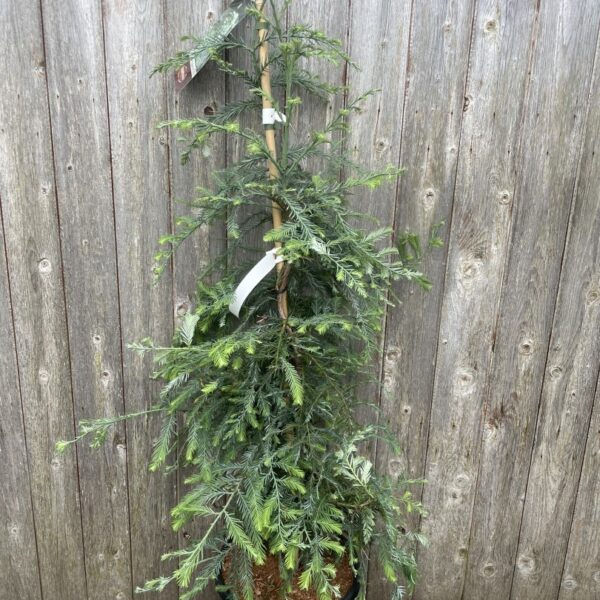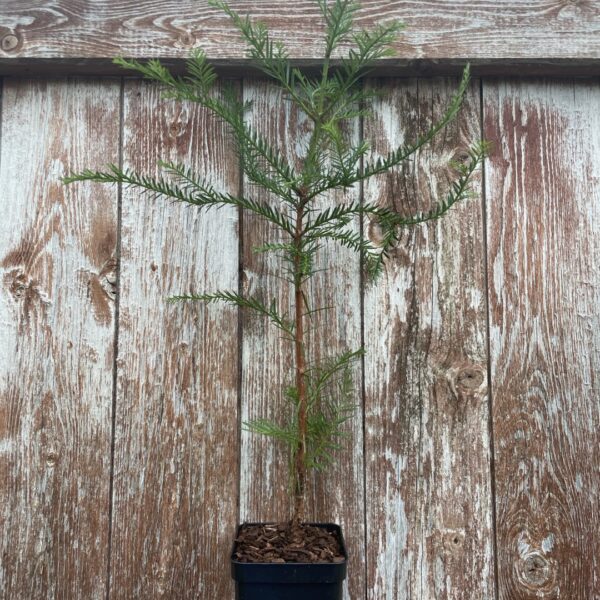
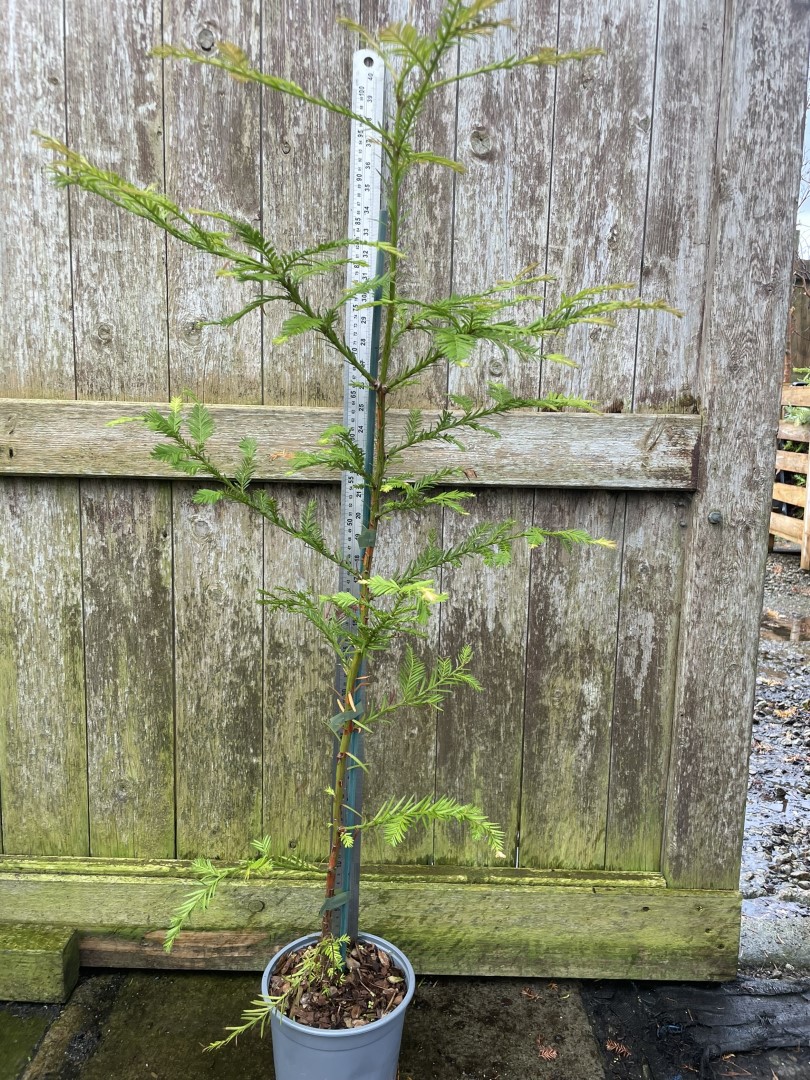

Coast Redwood Tree 100/120cm (2L)

Sequoia sempervirens

£61.74

Young giants at 100/120cm (2L), perfect for getting started with Coast Redwoods. These RHS award winners offer remarkable versatility, thriving in both containers and open ground.

Out of stock

Join the waitlist to be emailed when this product becomes available

Feel free to call 01257 752247 or email us if you would prefer to order on the phone or have any questions. Trade / wholesale enquiries are welcome.

Grown in Britain

Sequoia sempervirens, also known as the coast redwood or Californian redwood, is a stunning and majestic evergreen conifer. Renowned for its remarkable height, it stands among the tallest trees on the planet. With its elegant, needle-like foliage and distinctive reddish-brown bark, it possesses an undeniable allure. Flourishing in moist, coastal climates, the coast redwood is a perfect addition to gardens and parks. Its awe-inspiring presence and rich history make it a captivating focal point, connecting us to nature’s magnificence and evoking a sense of serenity. Embrace the beauty of Sequoia sempervirens and witness the wonder of these ancient giants gracing your landscape.

As a living testament to ancient history, Sequoia sempervirens invites you to connect with nature in its most magnificent form, creating a lasting impression in any landscape.

Sequoia sempervirens, the majestic Coast Redwood, is now listed as “Endangered” on the IUCN Red List, highlighting the urgent need for conservation measures. These awe-inspiring giants, once widespread along the western coast of North America, face significant threats from human activities, climate change, wildfires, and diseases. Habitat loss due to logging and land use changes has severely impacted their populations. As one of the tallest and oldest tree species on Earth, the preservation of Coast Redwoods is crucial not only for their ecological significance but also for maintaining the biodiversity and resilience of their unique forest ecosystems.

Efforts to protect and restore their habitats are essential to ensure the survival of this iconic species for future generations.

Sequoia sempervirens – Coast Redwood, holds several remarkable records:

  1. Tallest Tree: Coast Redwoods are renowned for being the tallest trees on Earth. The current record-holder for the tallest living tree is “Hyperion,” standing at an astonishing height of approximately 379 feet (116 meters). However, new discoveries may lead to the identification of even taller specimens.
  2. Largest Living Organism: The Coast Redwood forests form one of the largest living organisms on the planet due to their interconnected root systems, known as “clones.” These clones cover extensive areas and consist of genetically identical trees sharing a common root system.
  3. Oldest Tree: While not the oldest species, some individual Coast Redwoods have lived for over 2,200 years, making them some of the longest-living trees on Earth.
  4. Largest Groves: The Coast Redwood forests in California, particularly in areas like Redwood National and State Parks, host some of the most extensive and iconic groves of these majestic trees, creating awe-inspiring landscapes.
  5. Fastest Growth Rate: Coast Redwoods exhibit impressive growth rates, with young trees adding significant height each year. This rapid growth contributes to their towering stature.
  6. Carbon Sequestration: Due to their massive size and long lifespan, Coast Redwoods are effective carbon sinks, sequestering substantial amounts of carbon dioxide, making them valuable assets in combating climate change.
  7.  Sequoia sempervirens has gained the Royal Horticultural Society’s Award of Garden Merit.

Position young Sequoia sempervirens in full sun or partial shade. When container-growing, use a large, well-draining pot with quality compost. Regular watering is essential for pot-grown specimens, especially during the growing season. Feed annually with a balanced fertiliser. While hardy once established, young plants benefit from winter protection, particularly in containers.

 

Delivery charges will be based on the highest applicable rate from our rate table, determined by the items in your order.
Alternatively, we offer the option to collect your items in person by prior arrangement.
These prices are based on delivery to UK Mainland. Delivery to Highlands & Islands will be more.
Delivery Class Delivery Cost
Royal Mail Letter - Royal Mail Tracked £2.71
Royal Mail Letter - Royal Mail Second Class £0.79
Standard Items - Standard Courier (APC) £8.95
Standard Items - Standard Courier (Evri) £4.99
Medium Items - Standard Courier (APC) £9.95 This item
Medium Items - Standard Courier (APC/-5|£10.95 This item
Large Items - Pallet Courier £90.00
Large Items - Standard Courier (APC) £24.95
Pallet Courier - Pallet Courier£90.00

Coast Redwood – Sequoia sempervirens Care Guide

The Coast Redwood – Sequoia sempervirens is one of the world’s most magnificent trees, capable of reaching extraordinary heights in its native California. In UK gardens, while not achieving the same dramatic proportions, it still grows into an impressive specimen, typically reaching 20-35 metres. This evergreen conifer is characterised by its straight trunk, distinctive reddish-brown bark, and dense, dark green foliage that creates a stunning vertical accent in larger gardens. Despite its imposing stature, it’s surprisingly adaptable to UK conditions when given appropriate care.

Soil Requirements
Coast Redwoods thrive in well-draining, fertile soil with a pH between 5.5 and 7.0. While they prefer deep, loamy soils rich in organic matter, they can adapt to various soil types provided drainage is adequate. Regular addition of organic matter helps maintain soil quality and moisture retention, which is crucial for optimal growth.

Watering Guidelines
Young trees need consistent moisture during their establishment period, typically the first 2-3 years. Water deeply once weekly, adjusting for rainfall and temperature. While mature specimens develop some drought tolerance, they perform best with regular moisture, particularly during dry spells. Container-grown trees require more frequent watering, but always ensure pots have adequate drainage to prevent waterlogging.

Seasonal Maintenance

Spring (March-May)
Apply a balanced, slow-release fertiliser if needed, and refresh the organic mulch layer to a depth of 7-10cm, keeping it clear of the trunk. Check for any winter damage and monitor for early signs of pest activity.

Summer (June-August)
Maintain consistent soil moisture, especially during hot, dry periods. Minimal pruning is required, but remove any dead or damaged branches. Ensure the base remains clear of competing vegetation.

Autumn (September-November)
Gradually reduce watering as growth slows. Apply a fresh layer of mulch to protect roots through winter. This is a good time to assess the tree’s structure and plan any necessary maintenance.

Winter (December-February)
Young trees may need protection from severe frost and cold winds. Water only during dry spells when there’s no frost. Monitor for snow damage on branches, particularly in heavy snowfall areas.

Additional Care Notes
Coast Redwoods create their own microclimate as they mature, often collecting moisture from fog and mist through their foliage. They prefer locations with some shelter from strong winds, especially when young. While generally pest-resistant, regular monitoring helps catch any issues early.

These magnificent trees require careful placement due to their potential size. Consider their ultimate height and spread when planting, ensuring they have space to develop their natural form. While they can be pruned to control size to some extent, they’re best suited to larger gardens where they can achieve their natural grandeur. Their evergreen nature means they provide year-round interest and can serve as excellent screening trees or distinctive focal points in appropriate settings.

There are no reviews yet.

Your email address will not be published. Required fields are marked *