

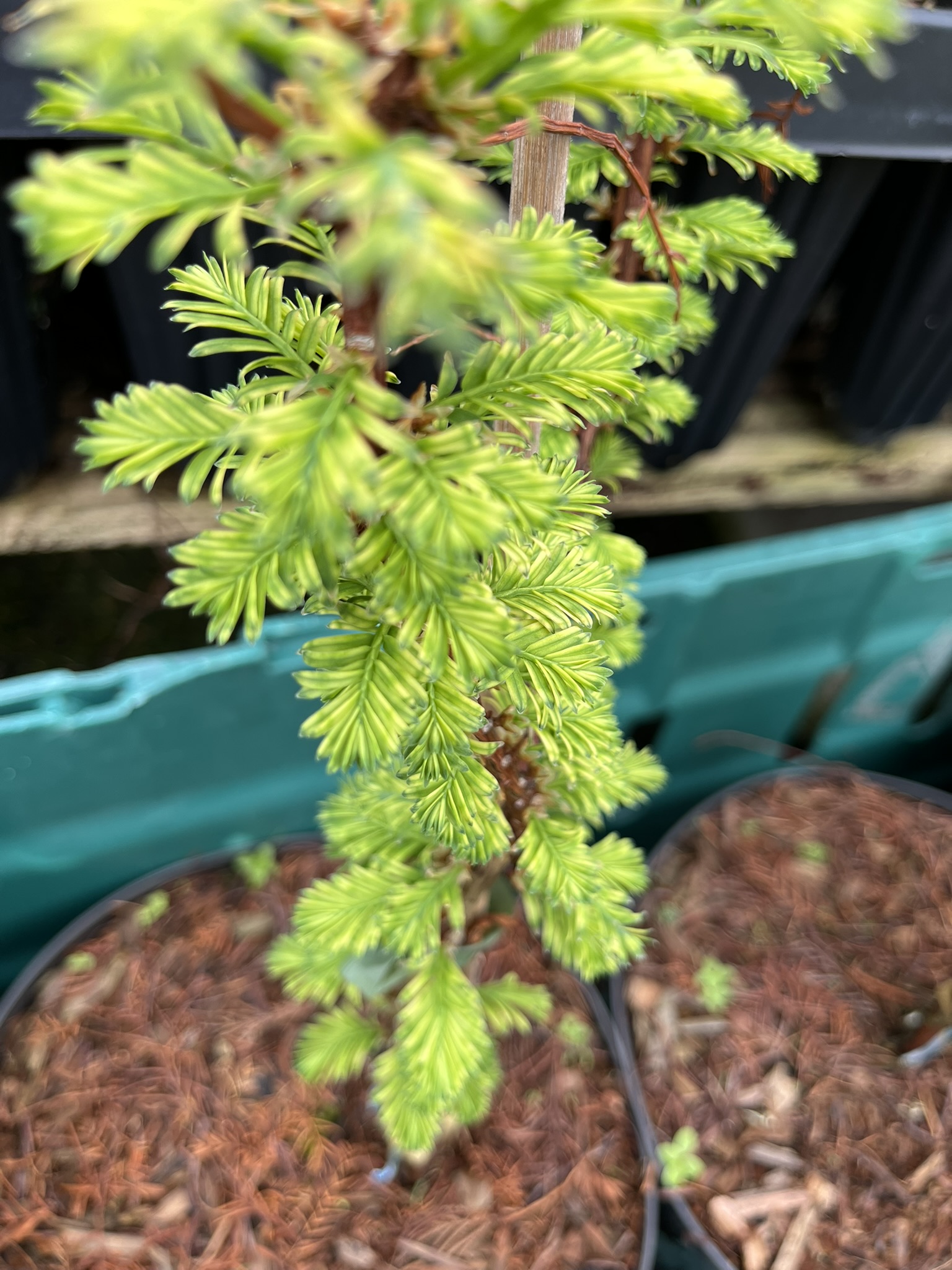
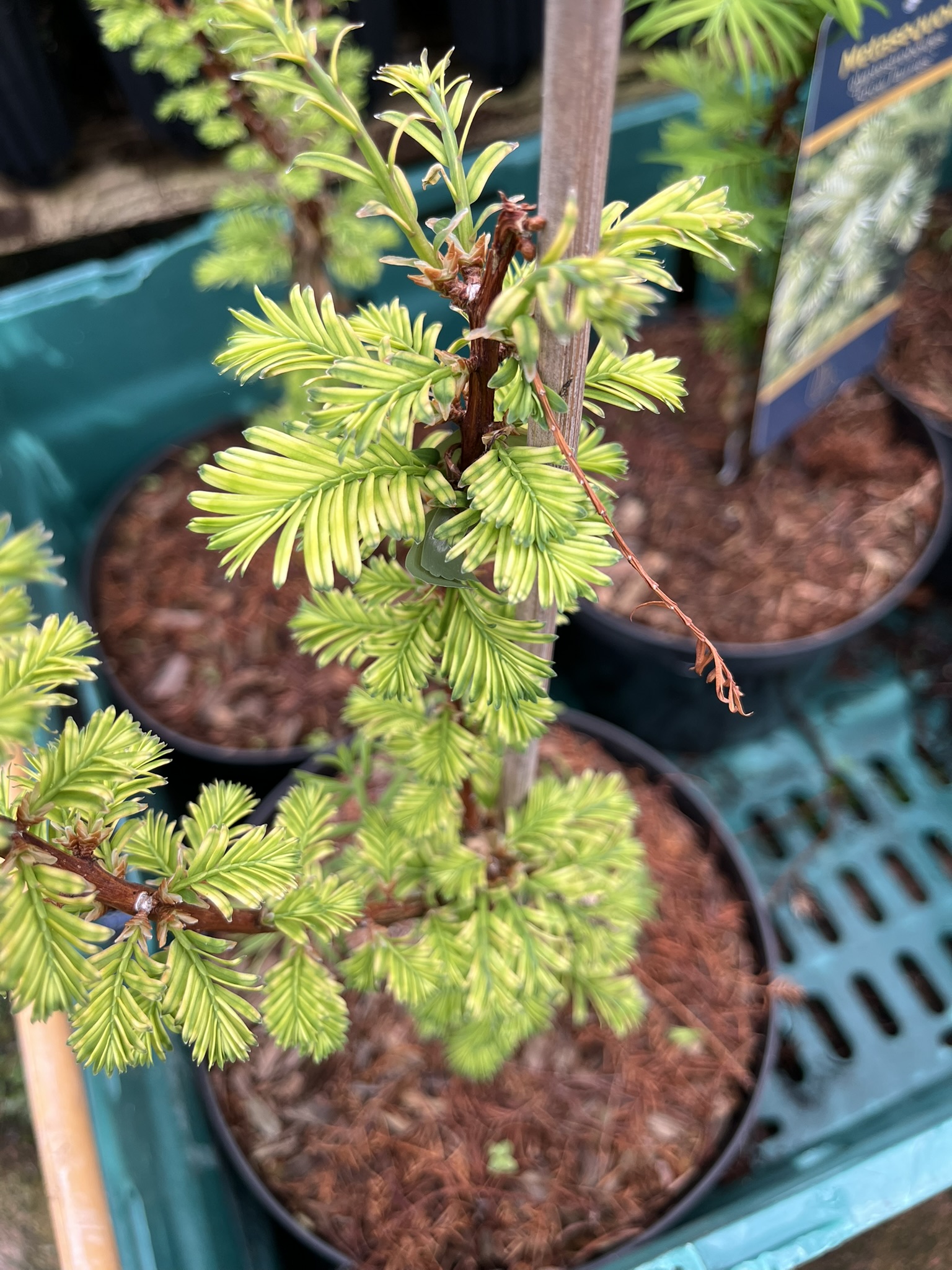
Discovered in the Netherlands in 2001, ‘Little Creamy’ represents a remarkable breakthrough in Dawn Redwood cultivation, offering a unique combination of compact growth habit and striking variegation. This slow-growing cultivar is characterized by its thick branches and notably upright, dense form, making it particularly suitable for smaller gardens or spaces where a more contained growth habit is desired.
The foliage emerges in spring with a captivating creamy white colour, gradually developing into an elegant white-on-green variegation as the season progresses. This distinctive pattern creates a luminous effect within the landscape, particularly when backlit by morning or evening sun. Selected by Bas Treffers, this cultivar has gained recognition for its stable variegation pattern and consistent growth habit, making it a valuable addition to the palette of ornamental conifers available to gardeners and designers.
It’s important to know that these trees are deciduous, dropping their leaves in late autumn and remaining bare until early spring. This makes them quite different from other redwoods, but offers a wonderful display through the year.
Spring begins with fresh, lime-green feathery leaves unfurling along the branches. The foliage deepens to a lovely soft green through summer, creating gentle, dappled shade beneath. Autumn brings the real show, with the entire tree glowing in shades of amber, copper and bronze before the leaves fall.
The winter reveal is just as lovely, showing off the tree’s elegant shape and beautiful fluted bark. The branches sweep upwards in a natural pyramid, creating a striking silhouette against winter skies. This neat, architectural form means it works well even in smaller gardens.
Dawn Redwoods are easy to grow and maintain. They prefer moisture-retentive soil but will cope with most conditions once established. Plant in full sun or partial shade, in a spot with enough space for their eventual height. They’re hardy throughout Britain and don’t mind exposed sites. Water regularly in the first few years and add a thick mulch around the base each spring. No regular pruning is needed as they naturally form an elegant shape.


There are no reviews yet.