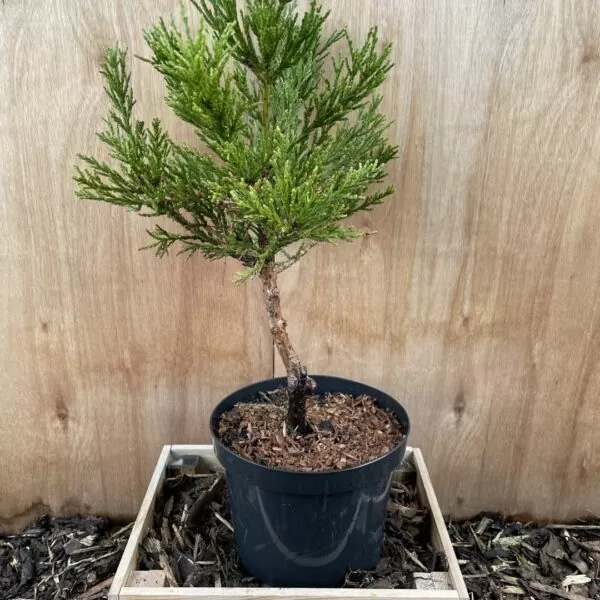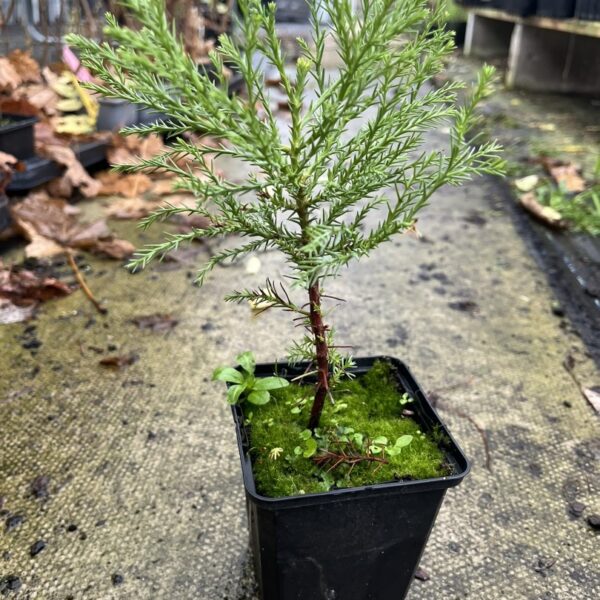
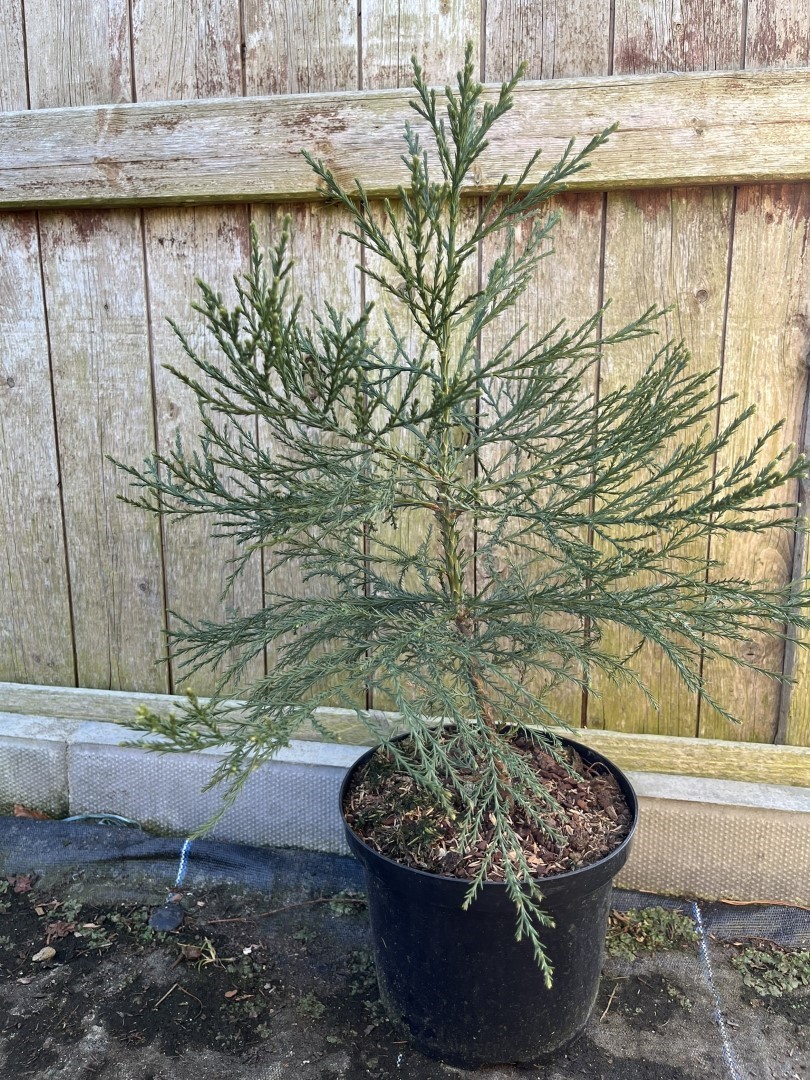
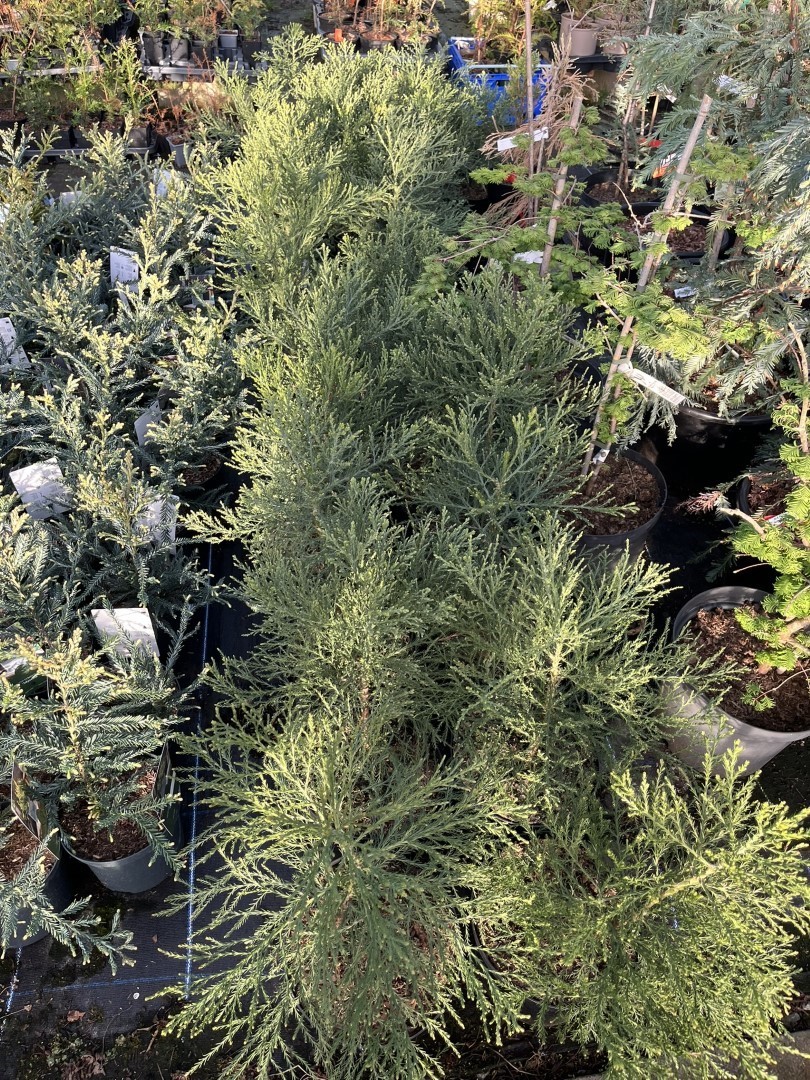
Giant Redwood 40/60cm (5L)

Sequoiadendron giganteum

£72.90

Discover the magic of a UK-grown Giant Redwood tree sapling. At our tree nursery nestled in Euxton, Lancashire, we nurture these majestic Redwoods with care and passion. Witness nature’s wonders unfold as you plant this awe-inspiring sapling in your own garden. Embrace the pride of growing a future giant, adding a touch of grandeur to your landscape. Support local conservation efforts while creating a lasting legacy for generations to come. Own a piece of nature’s magnificence with our exceptional Giant Redwood saplings, cultivated with love and expertise right here in the UK.

Sequoiadendron giganteum, commonly known as the giant sequoia or giant redwood, is an awe-inspiring evergreen conifer that commands attention in any landscape. With its massive trunk and majestic presence, this endangered species showcases the essence of strength and longevity.

Thriving in well-draining soil and a sunny location, Sequoiadendron giganteum becomes a monumental focal point in gardens, parks, and estates. Its unique combination of history and grandeur creates a captivating atmosphere, leaving a lasting impression on all who encounter it.

4 in stock

Feel free to call 01257 752247 or email us if you would prefer to order on the phone or have any questions. Trade / wholesale enquiries are welcome.

The Sequoiadendron giganteum, also known as the giant sequoia or giant redwood, is listed as “Endangered” on the International Union for Conservation of Nature (IUCN) Red List. This designation means that the species faces a very high risk of extinction in the wild.

The giant sequoia’s endangerment is primarily due to historical logging activities and ongoing habitat loss. Despite conservation efforts, these ancient trees continue to face threats from climate change, diseases, and wildfires. Protecting & preserving their natural habitats and growing you own are critical steps to ensure the survival of the Sequoiadendron giganteum for future generations.

Reaching altitudes of well over 30m (100ft) these towering giant conifers grow rapidly to their truly awe-inspiring size. The Wellingtonia has a distinct narrowly conical shape, pointed at the top, with attractive reddish brown bark that glows in the evening sunlight.

Giant Redwoods – Sequoiadendron giganteum – A very large and long-lived evergreen tree that reaches over 100m tall. They are an endangered species. Help conserve these ancient giants by growing your own. Originally they covered Europe and Asia, now their last remaining stand is on the West coast of America in California where they are threatened by wildfire and climate change.

They are growing in popularity in the UK and can be found across most of the country, both in private and public spaces. The tallest being a 150 year old specimen in Scotland, reaching over 55m. They commonly feature in the top ten largest, tallest, oldest & stoutest tree lists.

Sequoiadendron giganteum, commonly known as the giant sequoia, holds several impressive records:

  1. Largest Trees: Giant sequoias are among the largest living organisms on Earth, with some specimens reaching astounding heights of over 300 feet (91 meters) or more.
  2. Oldest Trees: While not as old as the bristlecone pine, giant sequoias are still some of the oldest trees on the planet, with some individuals estimated to be over 3,000 years old.
  3. Largest Volume: In terms of sheer volume, the giant sequoia is unparalleled. Its massive trunks and thick branches contribute to its impressive girth and immense overall size.
  4. Largest Tree by Volume: The “General Sherman” tree, located in California’s Sequoia National Park, holds the title of the largest tree by volume. It boasts a volume of approximately 52,500 cubic feet (1,487 cubic meters).
  5. Largest Tree by Circumference: The “General Grant” tree, found in Kings Canyon National Park, California, is known as the “Nation’s Christmas Tree” and holds the title of the second-largest tree by volume, but it has the largest base circumference of approximately 107 feet (32.6 meters).
  6. Largest Grove: The Giant Forest, situated in Sequoia National Park, contains a significant concentration of giant sequoias and is one of the most iconic and extensive groves of these majestic trees.

These records make the Sequoiadendron giganteum an awe-inspiring species, attracting nature enthusiasts and conservation efforts to preserve these remarkable giants for generations to come.

Sequoiadendron giganteum aka Wellingtonia has gained the Royal Horticultural Society’s Award of Garden Merit.

Hardy in all of UK and northern Europe (-20C to -15C) when mature.

Ultimate height
Higher than 12 metres

Time to ultimate height
20–50 years

Ultimate spread
Wider than 8 metres
Delivery charges will be based on the highest applicable rate from our rate table, determined by the items in your order.
Alternatively, we offer the option to collect your items in person by prior arrangement.
These prices are based on delivery to UK Mainland. Delivery to Highlands & Islands will be more.
Delivery Class Delivery Cost
Royal Mail Letter - Royal Mail Tracked £2.71
Royal Mail Letter - Royal Mail Second Class £0.79
Standard Items - Standard Courier (APC) £8.95
Standard Items - Standard Courier (Evri) £4.99
Medium Items - Standard Courier (APC) £9.95 This item
Medium Items - Standard Courier (APC/-5|£10.95 This item
Large Items - Pallet Courier £90.00
Large Items - Standard Courier (APC) £24.95
Pallet Courier - Pallet Courier£90.00

Giant Redwood – Sequoiadendron giganteum Care Guide

The Giant Redwood – Sequoiadendron giganteum, also known as the Wellingtonia here in the UK or Sierra Redwood in the USA, is among the most imposing of all conifers. While it won’t reach the monumental sizes seen in its native California, UK specimens can still grow to impressive heights of 30-40 metres or more. Distinguished by its massive trunk, soft, fibrous red-brown bark, and pyramidal shape, this evergreen giant creates an unforgettable presence in the landscape. Despite its enormous size, it’s surprisingly adaptable and has been successfully grown in UK gardens since Victorian times.

Soil Requirements
Giant Redwoods prefer well-draining, deep soils with a pH between 6.0 and 7.0. While adaptable to various soil types, they perform best in moisture-retentive, fertile soils with good organic content. The soil should be free-draining but capable of maintaining consistent moisture, as these trees require regular access to water despite being somewhat drought-tolerant once established.

Watering Guidelines
Newly planted trees need regular, deep watering to establish a strong root system during their first 2-3 years. Create a watering basin around the trunk and water deeply but infrequently to encourage deep root growth. Mature trees are more drought-tolerant but benefit from supplemental watering during extended dry periods. Container-grown specimens require more frequent watering and excellent drainage.

Seasonal Maintenance

Spring (March-May)
Apply a balanced, slow-release fertiliser if needed, particularly for younger specimens. Refresh the mulch layer, maintaining a depth of 7-10cm while keeping it away from the trunk. Check for winter damage and remove any dead or damaged branches.

Summer (June-August)
Monitor soil moisture levels, particularly during hot spells. While established trees are relatively drought-tolerant, consistent moisture promotes optimal growth. Minimal pruning is needed; focus on removing any dead, diseased, or crossing branches.

Autumn (September-November)
Reduce watering as temperatures cool and growth slows. Apply a fresh layer of mulch to protect roots through winter. Clear fallen debris from around the base to discourage pest habitation and disease.

Winter (December-February)
While generally hardy, young trees may benefit from protection against severe frost and cold winds. Avoid watering during freezing conditions. Check regularly for snow damage, particularly on younger specimens, as heavy snow can break branches.

Additional Care Notes
Giant Redwoods require significant space, not just for their height but also for their considerable spread at maturity. They create impressive vertical features and make excellent specimen trees in larger landscapes. While they can tolerate some pruning when young to maintain shape, they’re best left to develop their natural form.

These trees are generally resistant to pests and diseases, but regular monitoring helps identify any issues early. They prefer locations with full sun and shelter from strong winds, particularly when young. Consider their ultimate size carefully before planting, as they can dominate a landscape and potentially affect neighbouring properties.

Unlike their coastal cousin, Giant Redwoods have a better tolerance for drier conditions once established, though they still appreciate consistent moisture. Their impressive longevity means they can become heritage trees for future generations, making them an excellent choice for parks, large estates, and spacious private gardens where they have room to achieve their magnificent potential.

There are no reviews yet.

Your email address will not be published. Required fields are marked *