
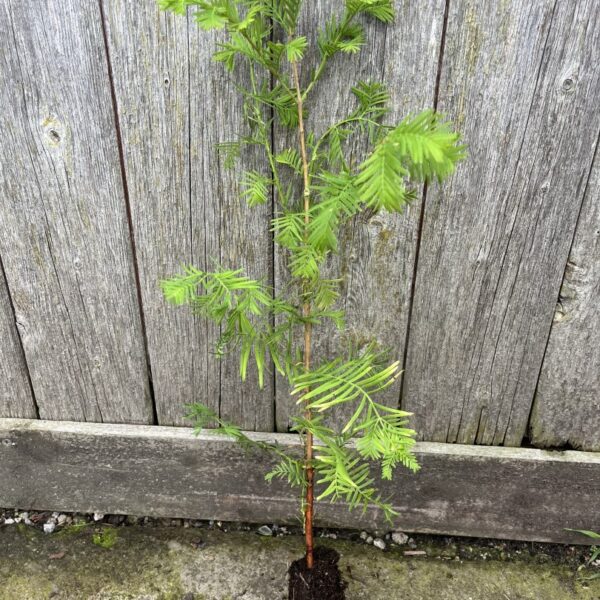
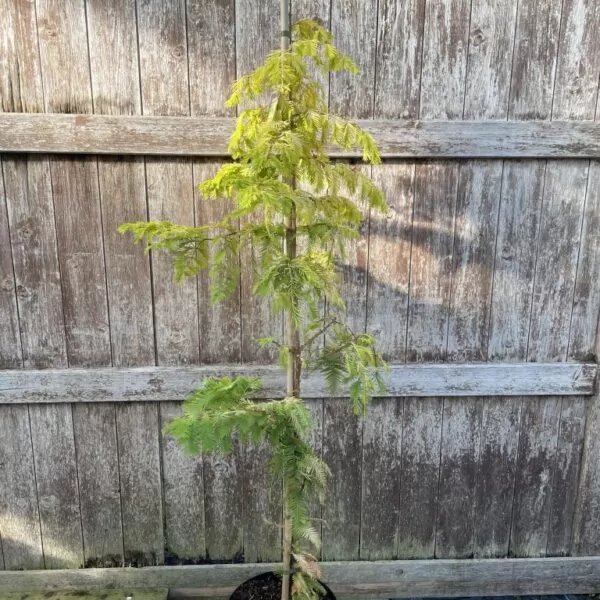
The Giant Redwood ‘Nanum’ is a remarkable dwarf cultivar of the legendary Sequoiadendron giganteum, offering all the majesty of its towering parent in a more garden-friendly form. This slow-growing conifer presents a dense, pyramidal habit with soft, blue-green foliage that creates an eye-catching focal point in borders, rock gardens, or as a specimen plant. The ‘Nanum’ cultivar maintains the characteristic thick, fibrous, reddish-brown bark that becomes increasingly attractive with age, adding year-round textural interest to your planting scheme.
This compact redwood develops a naturally neat, conical shape without requiring any pruning, making it an exceptionally low-maintenance addition to gardens of all sizes. The evergreen foliage consists of awl-shaped leaves that spiral around the stems, creating a lush, full appearance that provides structure and colour throughout the seasons. In winter, the blue-green tones may develop subtle bronze hints, adding another dimension to its visual appeal.
Growing Conditions and Position
Giant Redwood ‘Nanum’ thrives in full sun to partial shade, though it develops the best colour and densest growth when given plenty of direct sunlight. It prefers moist, well-drained soil with good depth, as it develops a substantial root system even in its dwarf form. This cultivar tolerates a wide range of soil types, including clay, loam, and sandy soils, provided they don’t become waterlogged. Once established, it shows reasonable drought tolerance, though regular watering during prolonged dry spells will maintain optimal growth and appearance.
Care Guide for British Climate
Plant your Giant Redwood ‘Nanum’ in spring or autumn when soil conditions are workable and temperatures are moderate. Dig a hole twice the width of the root ball and incorporate organic matter to improve soil structure. Water thoroughly after planting and maintain consistent moisture during the first growing season to encourage establishment.
Apply a balanced, slow-release fertiliser in early spring to support healthy growth. A 5-7cm layer of organic mulch around the base helps retain moisture, suppress weeds, and regulate soil temperature, but keep it away from direct contact with the trunk to prevent rot.
This cultivar is remarkably hardy, tolerating temperatures well below freezing without protection. It withstands exposed positions and shows good resistance to wind damage once established. Pruning is rarely necessary, though you can remove any dead or damaged branches in late spring. The dense growth habit naturally resists most pests and diseases, making this an exceptionally resilient garden plant.
Water during extended dry periods, particularly in summer, ensuring the soil remains evenly moist but never saturated. Container-grown specimens require more frequent watering and an annual top-dressing with fresh compost.
Ultimate height
1 – 2 metres
Time to ultimate height
20–50 years
Ultimate spread
1.5–2.5 metres
There are no reviews yet.