

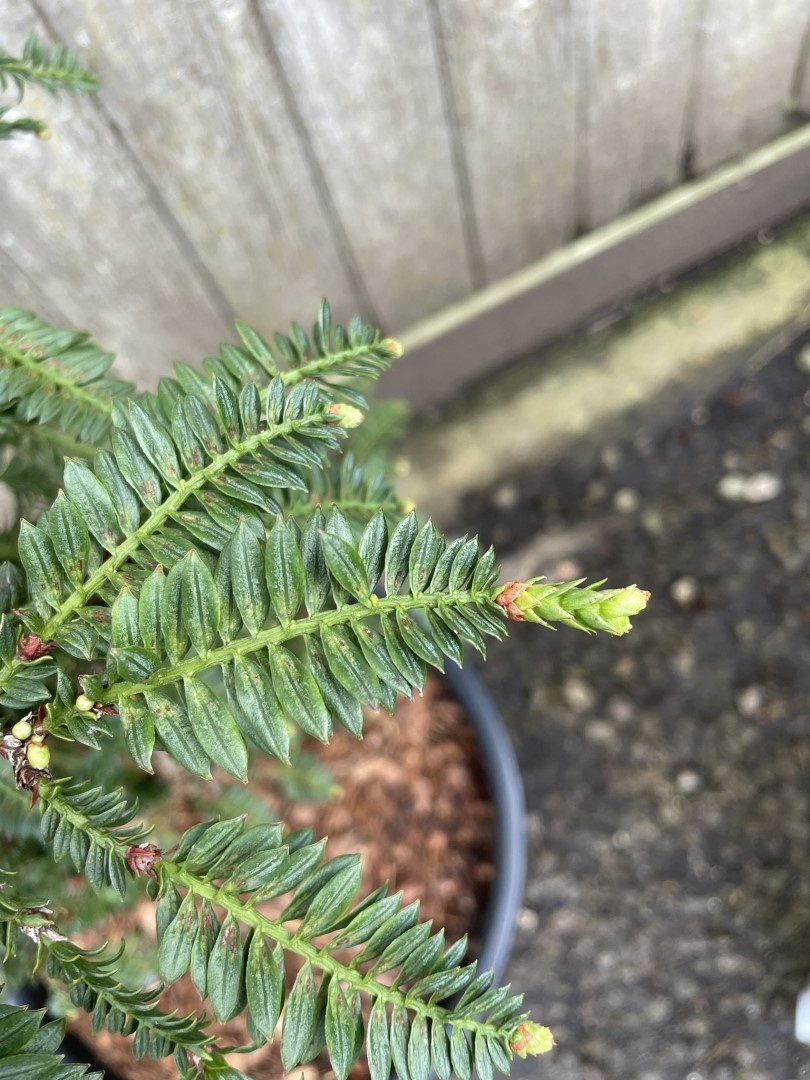
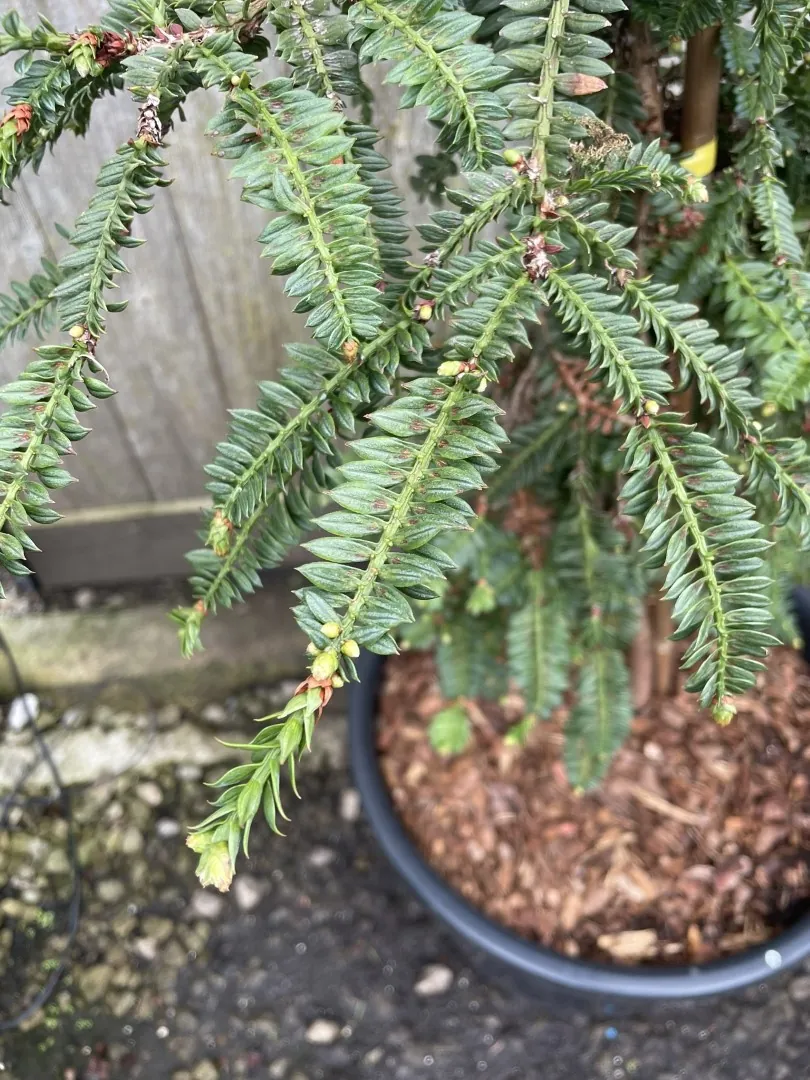

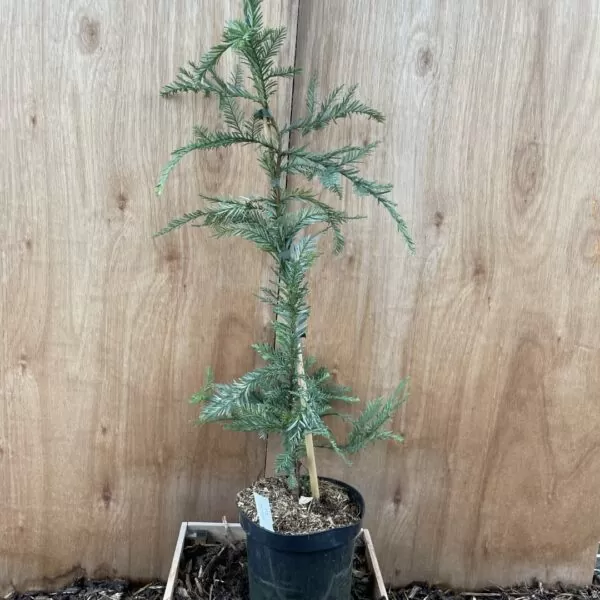
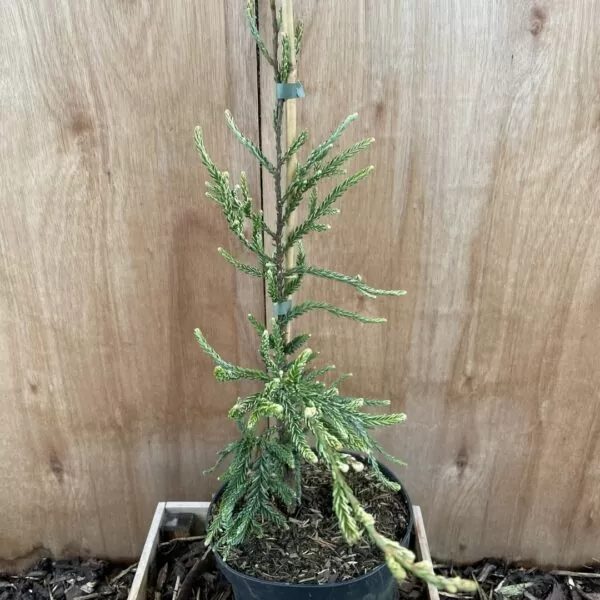
Sequoia sempervirens ‘Cantab’, discovered as a witch’s broom growing on a Coast Redwood at Cambridge University Botanic Gardens, takes its name from ‘Cantabrigian’ – the traditional term for someone or something connected to Cambridge University. This distinguished cultivar offers a unique interpretation of redwood characteristics, most notably in its distinctive foliage pattern.
The short, wide needles of ‘Cantab’ create a particularly rich green display, setting it apart from typical Coast Redwoods. These distinctive needles, remarkably similar to those found on Sequoia sempervirens ‘Prostrata‘, create a dense, lush appearance that adds textural interest to the garden landscape. The overall effect is one of abundant verdancy, with each branch adorned in this characteristically compact foliage.
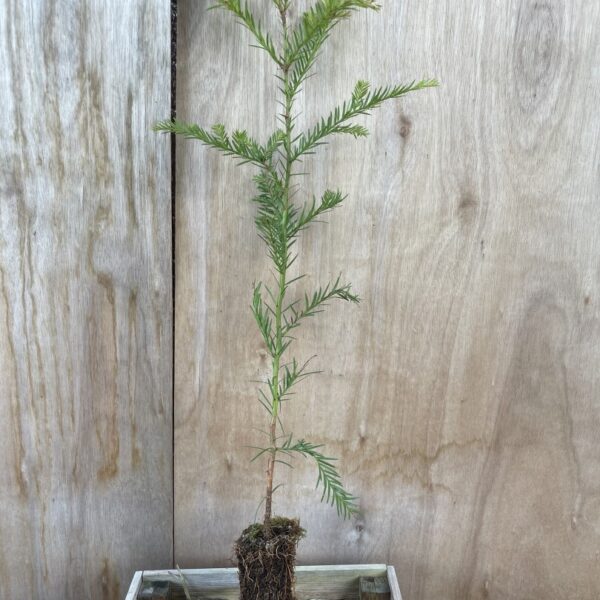
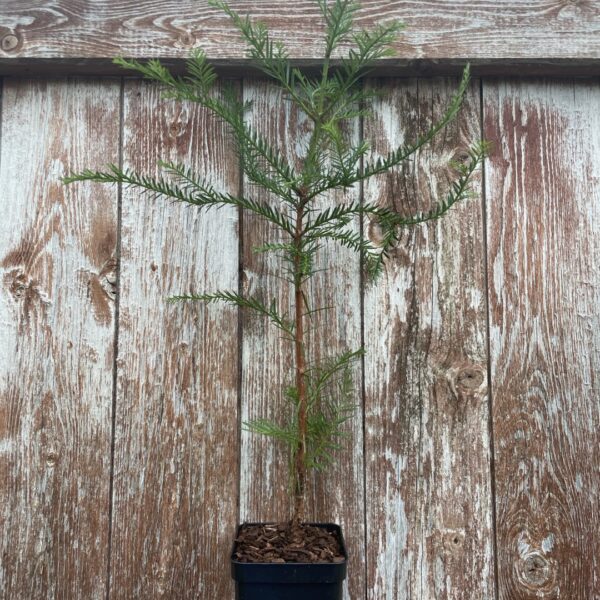
Despite its witch’s broom origins, ‘Cantab’ demonstrates vigorous growth and develops a pleasing pyramidal form. This architectural habit, combined with its unique foliage characteristics, makes it an excellent choice for creating distinctive focal points in garden settings. The dense growth pattern ensures year-round interest, while the pyramidal form provides valuable vertical accent.
Its discovery at Cambridge University Botanic Gardens marks an interesting chapter in British horticultural history, representing the ongoing development and diversity within Coast Redwood cultivation. The cultivar demonstrates how careful observation and selection can reveal remarkable new forms within this ancient genus.
Perfect for both formal and informal garden settings, ‘Cantab’ brings sophisticated structure and rich green colouration to the landscape. Its combination of distinctive foliage and strong growth habit makes it a fascinating choice for discerning gardeners.
Position Sequoia sempervirens ‘Cantab’ in full sun or partial shade. Ensure well-draining soil conditions. While hardy once established, young specimens benefit from shelter against harsh winds. Water regularly during the first growing season to establish a strong root system. The natural pyramidal form requires minimal pruning. Apply an annual spring mulch to preserve soil moisture and suppress weed growth.
There are no reviews yet.