


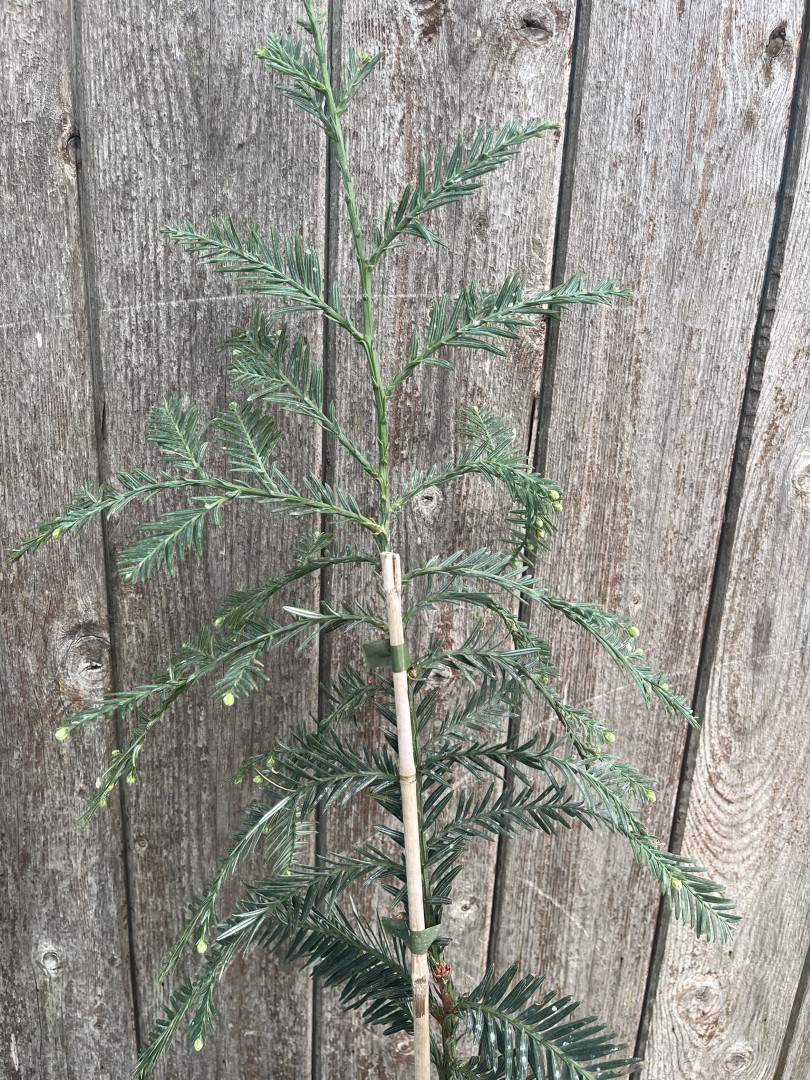
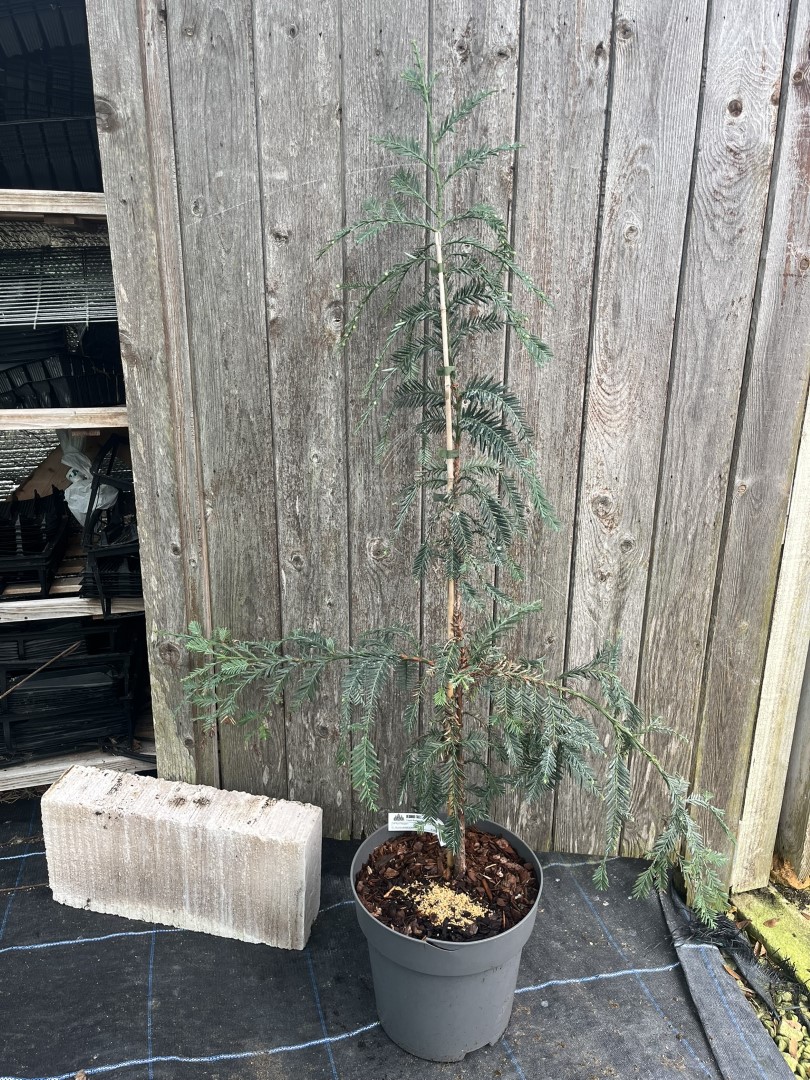
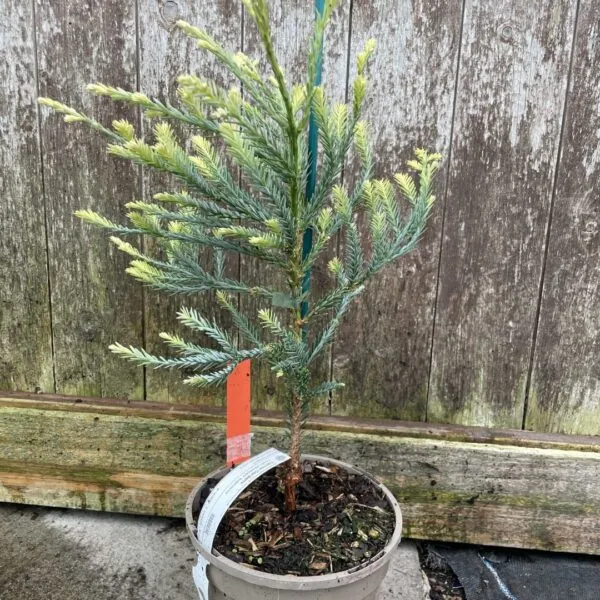
Coast Redwood ‘Loma Prieta Spike’ – Sequoia sempervirens is a named selection of one of the world’s best-known conifers, supplied here as a young tree of 100/120cm in a 10L pot. The coast redwood grows naturally in the fog belt of northern California and southern Oregon, where it forms some of the tallest trees on earth. This cultivar brings that character to gardens as an evergreen tree with soft, fibrous bark and fresh green foliage. As the name suggests, it is valued for an upright, spire-like outline with graceful weeping branches.
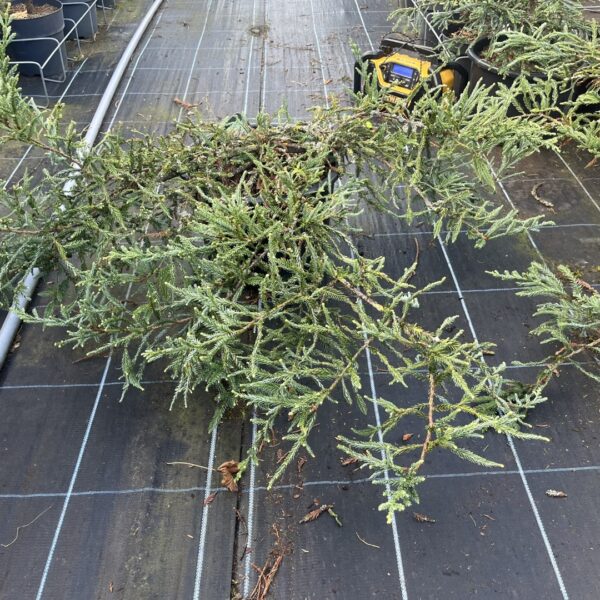
The foliage is made up of flat, needle-like leaves arranged in two neat rows along the shoots. They are typically mid to deep green above with paler bands beneath, and they stay on the tree all year, giving steady colour through winter. As the tree matures, the trunk develops the reddish-brown, spongy, deeply furrowed bark that gives the redwood its common name. The bark is soft to the touch and attractive in low winter sun, giving year-round interest beyond the foliage.
At 100/120cm, this tree is already a good size for planting and will settle in more quickly than larger specimens. The 10L pot holds a healthy root system that is easy to handle and plant. Redwoods are long-lived, so choose the position carefully and allow plenty of room for future growth. A single tree makes a strong focal point on a lawn, in a large border or at the end of a long view. Coast redwoods are also among the few conifers that can regrow from cut stumps and older wood.
Care Guide
Position: Plant in full sun or partial shade. Coast redwoods prefer a sheltered spot away from cold, drying winds, which can brown the foliage in exposed sites. They do well in the mild, moist western and southern parts of the country, where conditions most resemble their native coastal climate.
Soil: Choose moist but well-drained soil that is fertile and neutral to acidic. Avoid shallow chalk and ground that stays waterlogged in winter. Dig in well-rotted organic matter before planting to help hold moisture.
Planting: Dig a hole twice the width of the 10L pot and plant at the same depth as the tree sat in its container. Firm the soil gently, water in well and spread a 5–7cm layer of mulch around the base, keeping it clear of the trunk. A short stake may help in windy spots during the first year or two.
Watering: Redwoods need moisture, especially when young. Water regularly through the first two summers and during dry spells, as drought can cause browning. A thick mulch helps hold moisture in the soil.
Feeding: Apply a balanced slow-release fertiliser in spring for the first few years. Established trees rarely need extra feeding in reasonable soil.
Pruning: Little pruning is needed. Remove dead, damaged or crossing shoots in late winter or early spring, and keep a single leading shoot to keep the upright form.
Winter care: The species is generally hardy in the British climate. Young trees in cold or exposed gardens may benefit from shelter or a windbreak during harsh spells.
There are no reviews yet.