
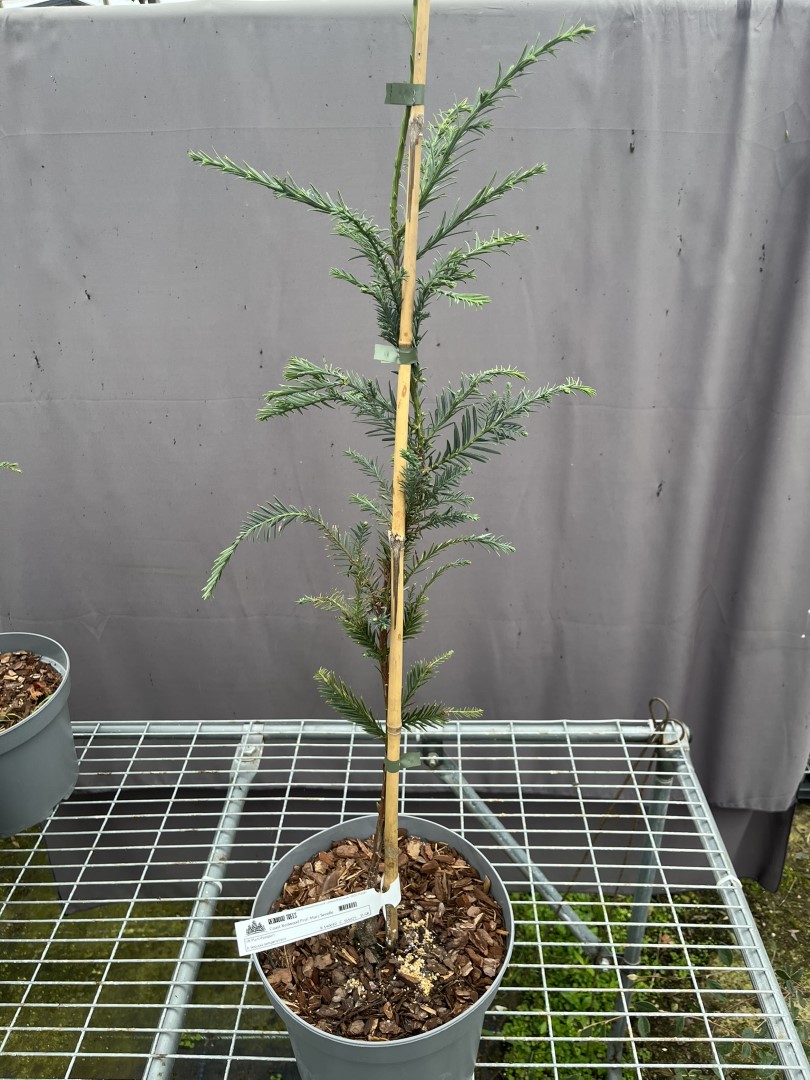
The Coast Redwood ‘Prof. Marc Senelle’ represents an exciting new introduction to the world of ornamental conifers, having been officially named in summer 2025. This remarkable cultivar of Sequoia sempervirens showcases the majestic characteristics that have made Coast Redwoods legendary, whilst offering a form particularly suited to garden cultivation. With its distinctive dark green, glossy needles that catch the light beautifully throughout the seasons, this cultivar brings year-round architectural interest and a touch of ancient forest grandeur to your outdoor space.
What sets ‘Prof. Marc Senelle’ apart is its strong, upright growth habit combined with those exceptionally lustrous, dark green needles that create a dense, elegant silhouette. The foliage maintains its rich colouring throughout winter, providing valuable evergreen structure when many other plants have retreated. This vigorous grower establishes quickly once planted, developing into a striking specimen that commands attention without overwhelming smaller gardens during its early years.
This 40/60cm plant arrives in a generous 5-litre pot, giving it an excellent root system that ensures reliable establishment. At this young stage, you’re investing in a tree that will develop into a magnificent focal point, perfect for creating vertical interest in mixed borders, as a statement specimen on lawns, or as part of a collection of choice conifers.
Growing Coast Redwood ‘Prof. Marc Senelle’ in British Gardens
Coast Redwoods thrive in the mild, moist conditions found across much of Britain, particularly favouring regions with higher rainfall and humidity. Plant in a sheltered position with full sun to partial shade, though best growth occurs with good light levels. The soil should be deep, fertile, and moisture-retentive yet well-drained – these trees dislike waterlogged conditions but equally need consistent moisture, especially during their establishment phase.
Prepare the planting hole generously, incorporating plenty of organic matter to improve soil structure and water retention. After planting, apply a thick mulch of bark or compost around the base, keeping it clear of the trunk itself. Water regularly during dry spells for the first two growing seasons until the root system has spread sufficiently.
Feed annually in early spring with a balanced slow-release fertiliser to support healthy growth. Young trees benefit from protection from cold, drying winds, so consider staking initially and providing a windbreak if your garden is exposed. Pruning is rarely necessary beyond removing any damaged or crossing branches in late winter.
Coast Redwoods are remarkably hardy once established, tolerating temperatures well below freezing. Their natural pest and disease resistance makes them low-maintenance additions to gardens, requiring little intervention once they’ve settled in.
Ultimate height
Higher than 12 metres
Time to ultimate height
20–50 years
Ultimate spread
4–8 metres


There are no reviews yet.