
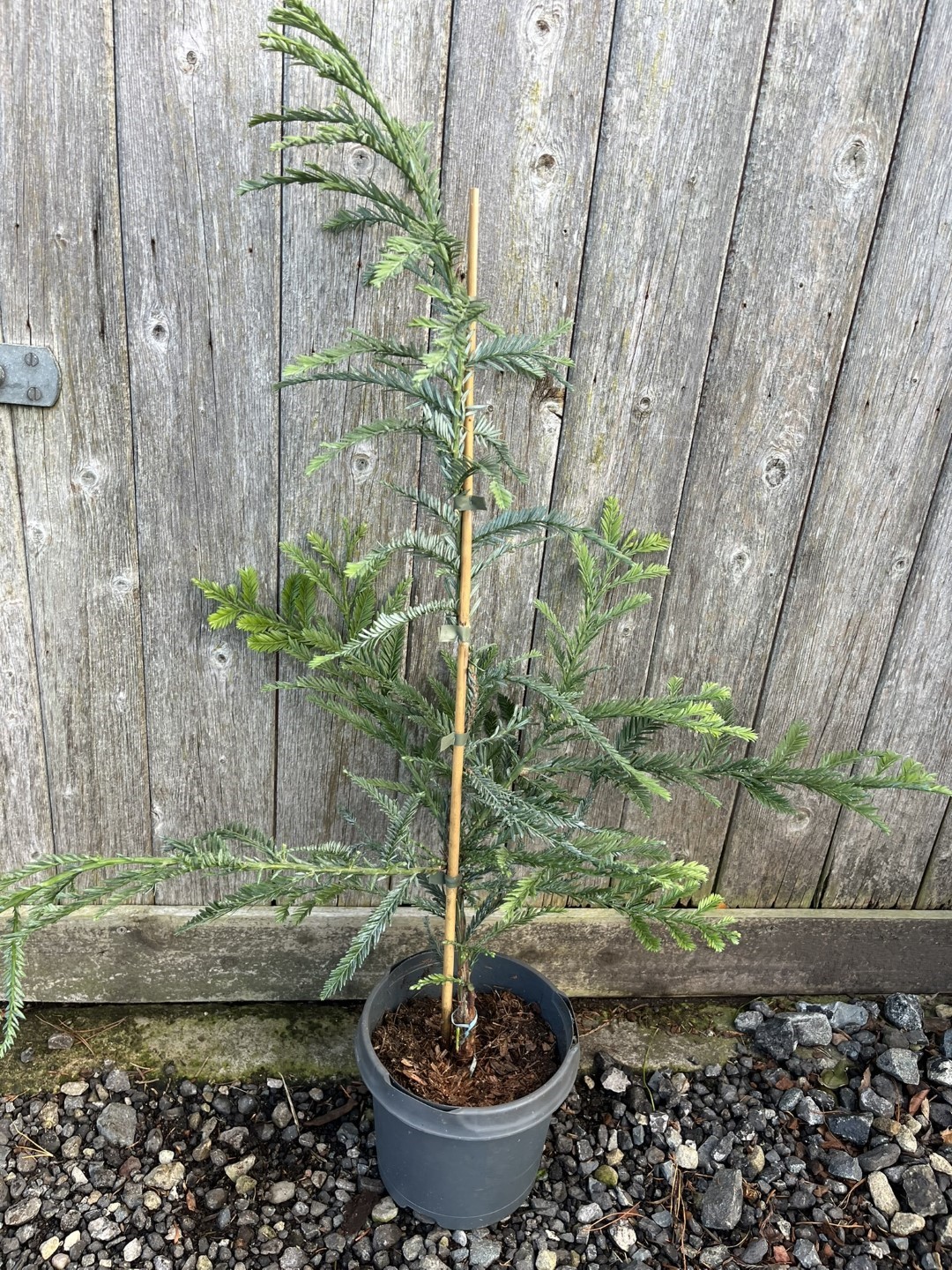
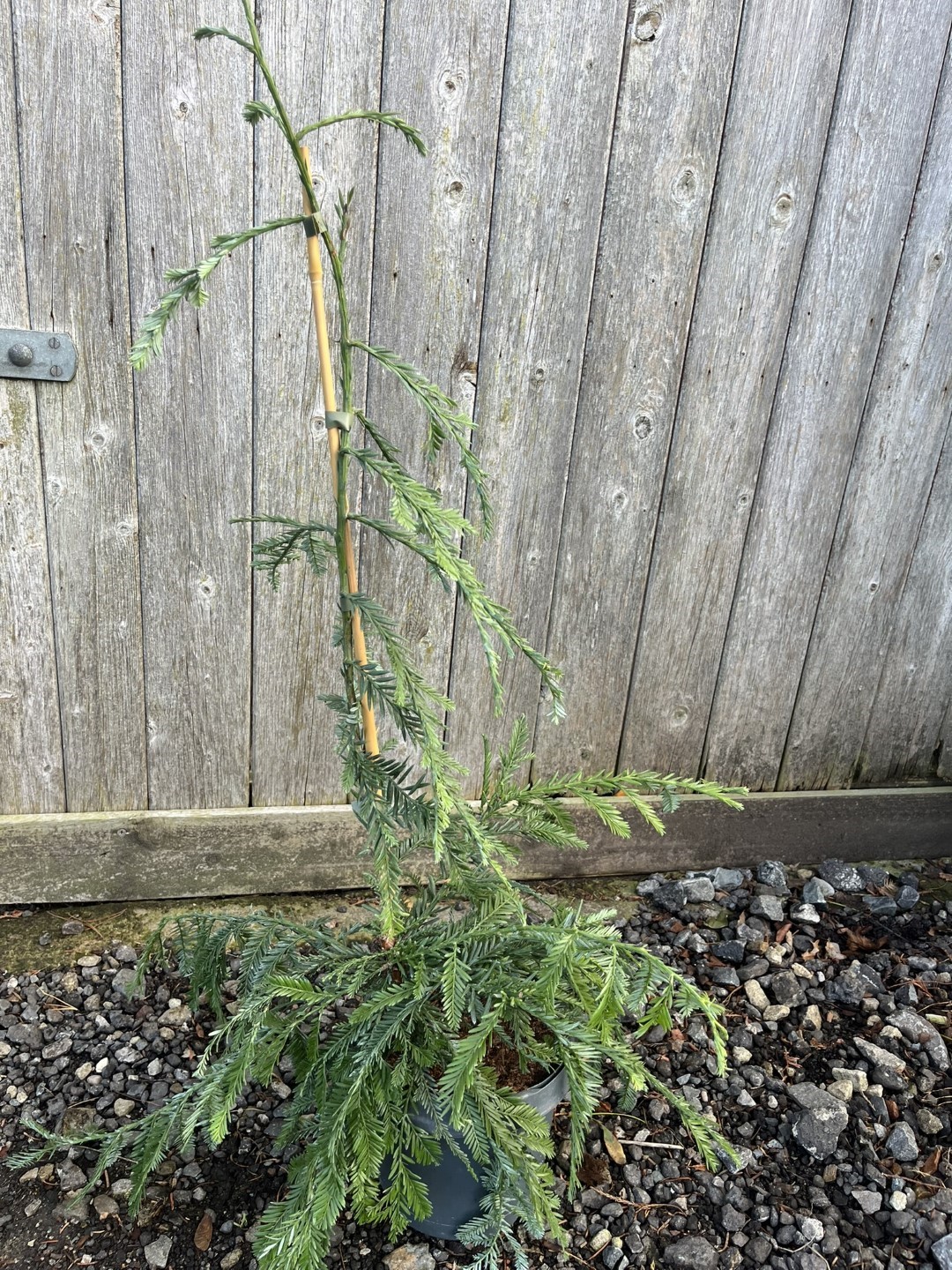
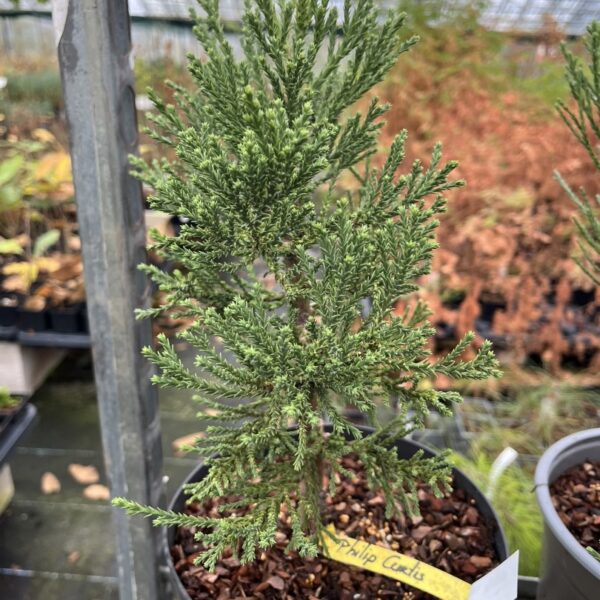
Coast Redwood ‘Steel Blue’ – Sequoia sempervirens is a handsome selection of the famous Californian redwood, chosen for its soft, silvery blue-grey foliage. This plant is supplied at 60/80cm tall in a 3L pot. Well rooted and ready to plant out, it can go straight into the ground so you can watch it establish.
The needles are short, flat and densely packed along arching branches. They have a cool steel-blue tone that holds all year round, and the colour is especially bright on fresh spring growth. Compared with the species, ‘Steel Blue’ tends to grow more compactly in its early years and forms a neat, conical shape. Over time the trunk develops the fibrous, reddish-brown bark that redwoods are loved for. The bark is soft and spongy to the touch and glows warmly in low winter sunshine.
This tree has real presence, so be sure to give it plenty of room. It works well as a standalone specimen on a lawn, as a focal point at the end of a long border, or as part of a mixed planting of conifers in a larger garden. The blue foliage contrasts well with deep green hollies, yews and pines, and it looks smart beside purple-leaved shrubs such as smoke bush or copper beech. While it is young, you can grow it in a large container on a patio for a few years before moving it to a permanent spot.
Coast redwoods are fully hardy and cope well with the cool, damp conditions found across much of the country. They actually prefer a humid climate with regular rainfall, which reflects their natural home in the fog belt of coastal California. They are also among the few conifers that can regrow from older wood, so they recover well if they are damaged. Wildlife benefits too, as birds use the dense branches for shelter and nesting.
If you are after an evergreen with unusual colour and long-term structure, ‘Steel Blue’ is a rewarding choice. It brings a slice of ancient forest into your own garden.
Care Guide
Plant in full sun or partial shade, ideally sheltered from harsh drying winds, in moist but well-drained, slightly acidic to neutral soil. Dig a hole twice the width of the pot, loosen the roots gently and plant at the same depth as before. Water deeply and regularly through the first two summers, never letting it dry out. Feed with a slow-release fertiliser each spring. Pruning is rarely needed beyond removing damaged shoots. Spread a thick mulch of bark around the base to lock in moisture.
Ultimate height
Higher than 12 metres
Time to ultimate height
20-50 years
Ultimate spread
Wider than 8 metres
There are no reviews yet.