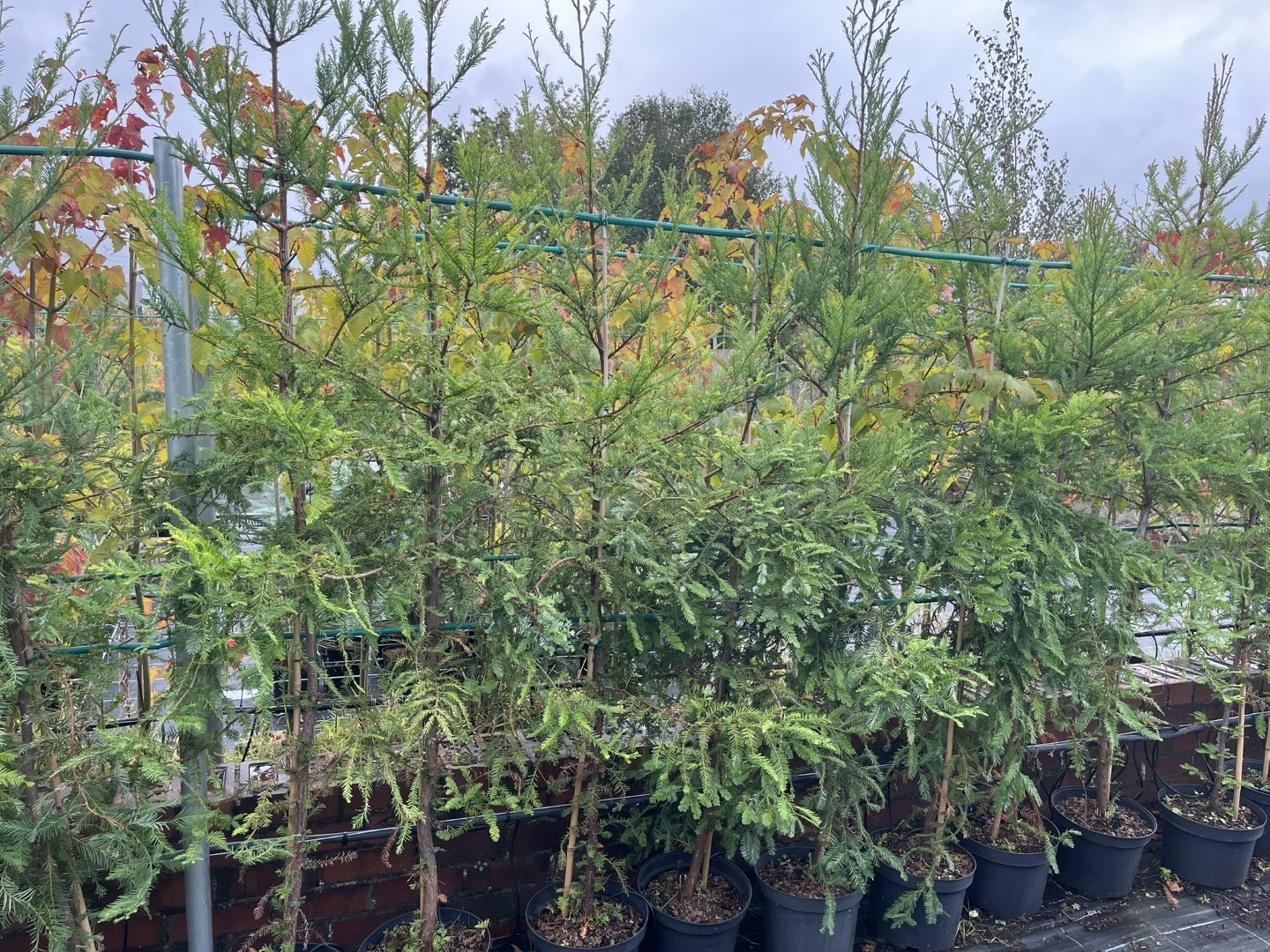
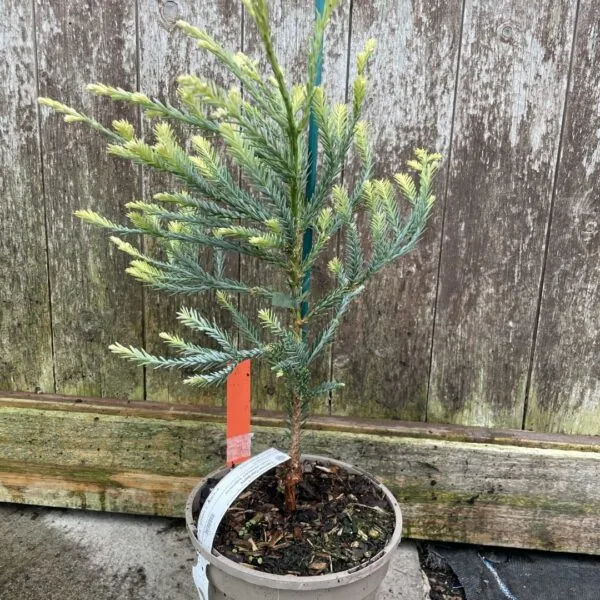
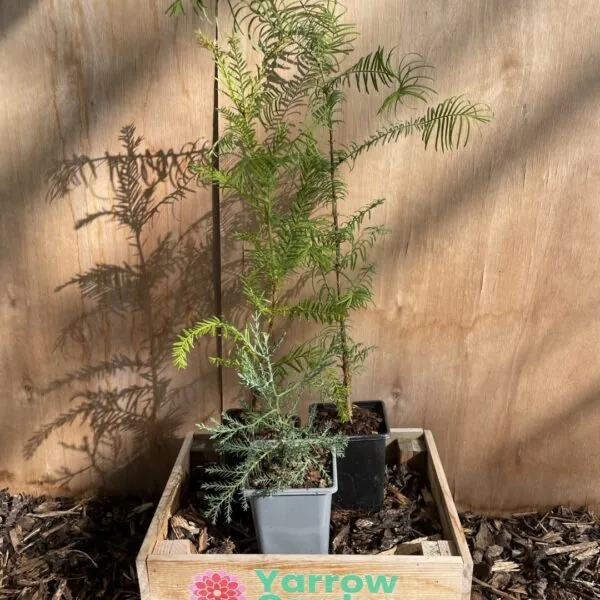
The Coast Redwood – Sequoia sempervirens is the tallest tree species on Earth and one of the most awe-inspiring conifers you can grow in a garden. Supplied at 150/200cm in a 15L pot, this specimen gives you the chance to grow a tree with an extraordinary natural history. Native to the cool, moist coastal forests of northern California and southern Oregon, it is a fast-growing evergreen that develops a tall, narrow crown and eventually becomes one of the most impressive trees in any garden.
The Coast Redwood is classified as Endangered on the IUCN Red List of Threatened Species, with its natural range greatly reduced by centuries of logging and habitat loss. The remaining ancient redwood forests are protected within a network of parks and reserves, including Redwood National and State Parks, which UNESCO recognises as a World Heritage Site. Planting a Coast Redwood in cultivation offers the chance to enjoy one of the world’s most remarkable tree species while helping to keep this extraordinary species widely represented beyond its shrinking natural range.
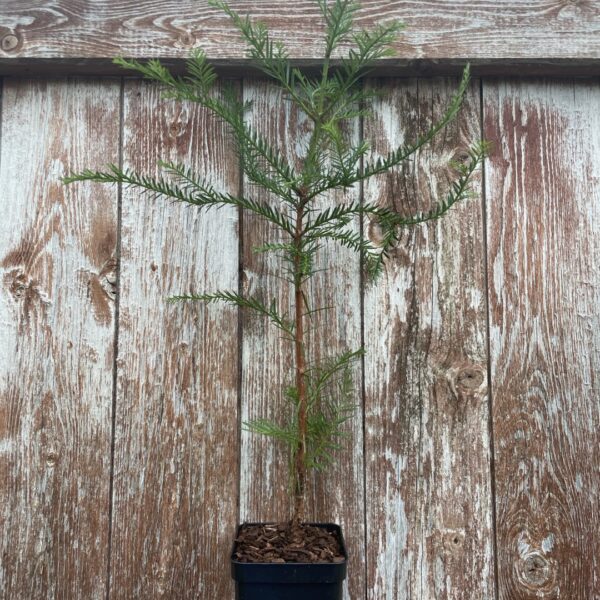
The foliage consists of soft, flat, dark-green needles arranged in two rows along the branchlets, giving the tree a graceful, almost fern-like appearance. The underside of each needle is noticeably paler, with distinctive white bands of stomata. The bark is one of its most spectacular features, becoming thick, fibrous and deeply furrowed with age, developing the characteristic rich reddish-brown colour for which the species is famous. The bark can become remarkably thick and provides considerable protection against fire and other environmental stresses. Small, woody cones around 1.5–3cm long are produced on mature trees.
Grown as a single specimen on a large lawn, in parkland or within a spacious garden, the Coast Redwood has every chance of becoming a truly monumental tree. It also performs very well in pots. It is particularly well suited to the wetter and milder parts of Britain, where the combination of moisture and humidity resembles conditions in its native range. It is a fast-growing species when young, but ultimately needs considerable space and should be planted well away from buildings, drains and boundaries. Given the right conditions, it can become a spectacular evergreen landmark for generations.
Key Facts
- Conservation status: Endangered – IUCN Red List
- Native range: Coastal northern California and southern Oregon
- World’s tallest tree species: Coast Redwoods are the tallest tree species on Earth
- Record height: The tallest known living Coast Redwood, Hyperion, stands at approximately 116 metres
- Over 100 metres tall: Exceptional trees can exceed the height of a 30-storey building
- Long-lived: Can live for more than 2,000 years
- Huge trunks: Mature trees can develop trunks several metres in diameter
- UNESCO connection: Redwood National and State Parks are recognised as a UNESCO World Heritage Site
- Evergreen: Unlike the Dawn Redwood, Coast Redwood keeps its foliage throughout the year
- Growth: A fast-growing tree that ultimately requires substantial space
Care Guide
Choose a site in full sun or light shade with deep, fertile, moisture-retentive but free-draining soil. Coast Redwoods perform particularly well in the wetter and milder parts of Britain, especially western and southern areas where atmospheric humidity and regular rainfall suit them. They can grow elsewhere in Britain provided they receive adequate moisture, but young trees should not be allowed to dry out during prolonged summer spells.
Plant between October and March while the soil is workable, digging a hole at least twice the width of the rootball and loosening the base. Position the tree at the same depth it was growing in the pot, firm gently and water thoroughly. Stake young trees in exposed locations for the first few years, checking ties regularly as the trunk expands.
Water generously during the first three summers and whenever prolonged dry weather occurs. A 7–10cm mulch of composted bark or leaf mould applied each spring will help retain moisture and suppress competing weeds; keep the mulch clear of the trunk. A balanced slow-release fertiliser in spring can be useful on poorer soils.
Pruning is rarely needed and is best avoided while the tree is still developing its natural form. Remove only dead, damaged or crossing branches, ideally in late winter. Coast Redwood is hardy throughout much of Britain, although young trees benefit from shelter while establishing.
Ultimate height
Higher than 12 metres
Time to ultimate height
More than 50 years
Ultimate spread
Wider than 8 metres

There are no reviews yet.