
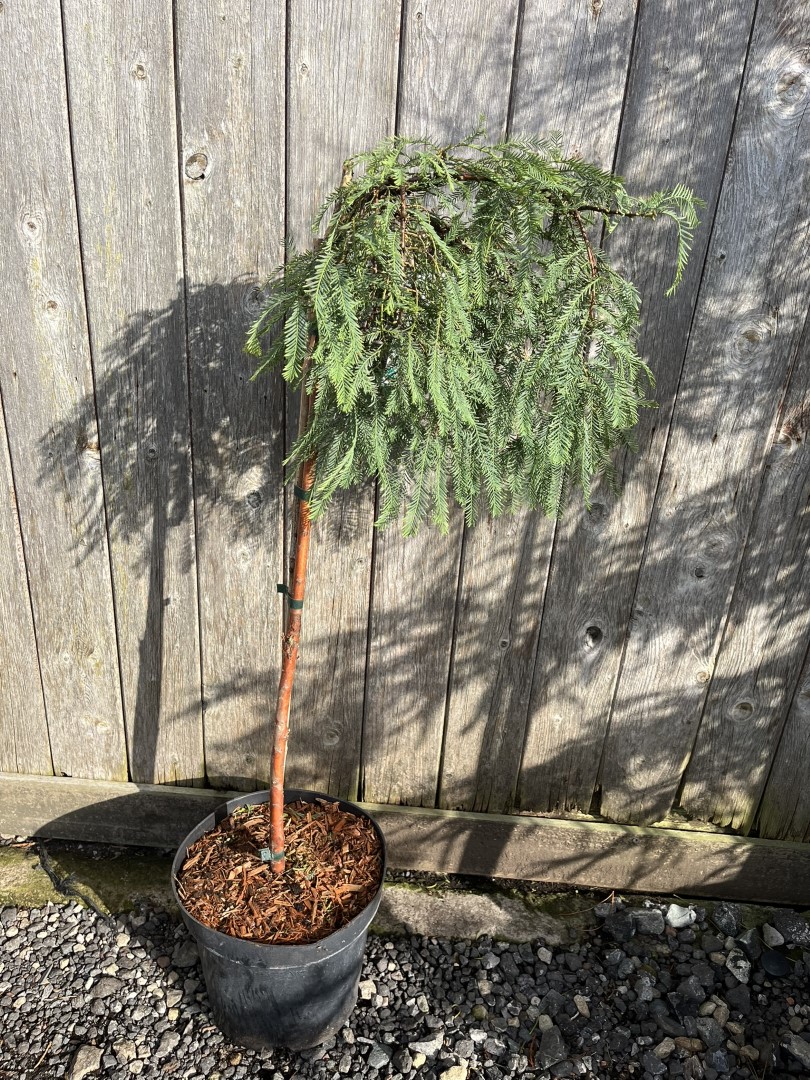
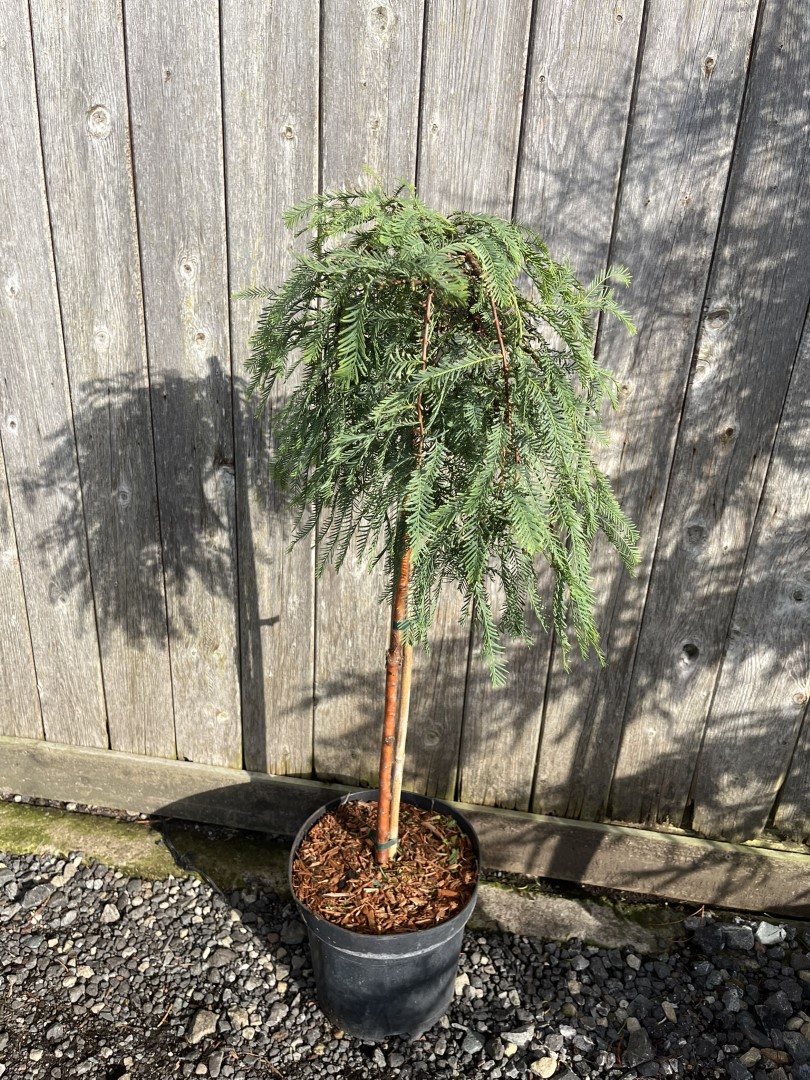
Dawn Redwood ‘Miss Grace’ – Metasequoia glyptostroboides is a graceful deciduous conifer that brings exceptional seasonal interest to gardens throughout the year. This elegant cultivar develops a naturally narrow, upright habit with delicate, feathery foliage that emerges fresh green in spring, deepens through summer, and transforms into rich bronze and russet tones before falling in autumn. Unlike many conifers, this tree’s deciduous nature creates a dynamic presence that changes with the seasons, offering year-round visual appeal.
The soft, fern-like foliage of ‘Miss Grace’ creates a fine-textured appearance that contrasts beautifully with broader-leaved plants. Its pyramidal form and relatively slender profile make it particularly suitable for gardens where space is at a premium, or where a vertical accent is needed without excessive spread. The reddish-brown bark develops attractive fissures and texture as the tree matures, adding winter interest after the needles have fallen.
This cultivar thrives in moist, well-drained soils and demonstrates good tolerance of wetter conditions, making it ideal for gardens with heavier clay soils or areas near water features. Dawn Redwood ‘Miss Grace’ performs best in full sun to partial shade, where it develops its most compact and symmetrical form. The tree establishes well and grows at a moderate pace, making it manageable for medium to large gardens.
As a specimen tree, ‘Miss Grace’ creates a strong focal point, whilst its refined appearance also works well in mixed borders alongside shrubs and perennials. The tree’s tolerance of urban pollution and adaptability to various soil types adds to its versatility. It can be planted as a single specimen or in groups for greater impact, and works particularly well reflected in water.
Care Guide
Position: Plant in full sun to partial shade in a location that offers protection from strong winds, particularly when young. The tree develops its best form and autumn colour when grown in good light.
Soil: Prefers moist, fertile, well-drained soil but tolerates a range of conditions including clay. Add organic matter at planting time to improve soil structure and moisture retention. Avoid very dry or extremely waterlogged sites.
Watering: Water regularly during the first two growing seasons to establish a deep root system. Once established, the tree shows good drought tolerance but performs best with consistent moisture, particularly during prolonged dry spells in summer.
Feeding: Apply a general-purpose fertiliser in early spring. A mulch of well-rotted compost or bark around the base helps retain moisture and adds nutrients gradually.
Pruning: Minimal pruning required. Remove any dead, damaged or crossing branches in late winter or early spring. The tree naturally develops an attractive shape without intervention.
Mulching: Apply a 5-8cm layer of organic mulch around the base, keeping it clear of the trunk. This conserves moisture, suppresses weeds and regulates soil temperature.
Seasonal Care: Protect young trees from harsh winter winds with temporary screening if necessary. The tree is fully hardy once established and requires no special winter protection.
Ultimate height
Higher than 12 metres
Time to ultimate height
20–50 years
Ultimate spread
4–8 metres


There are no reviews yet.