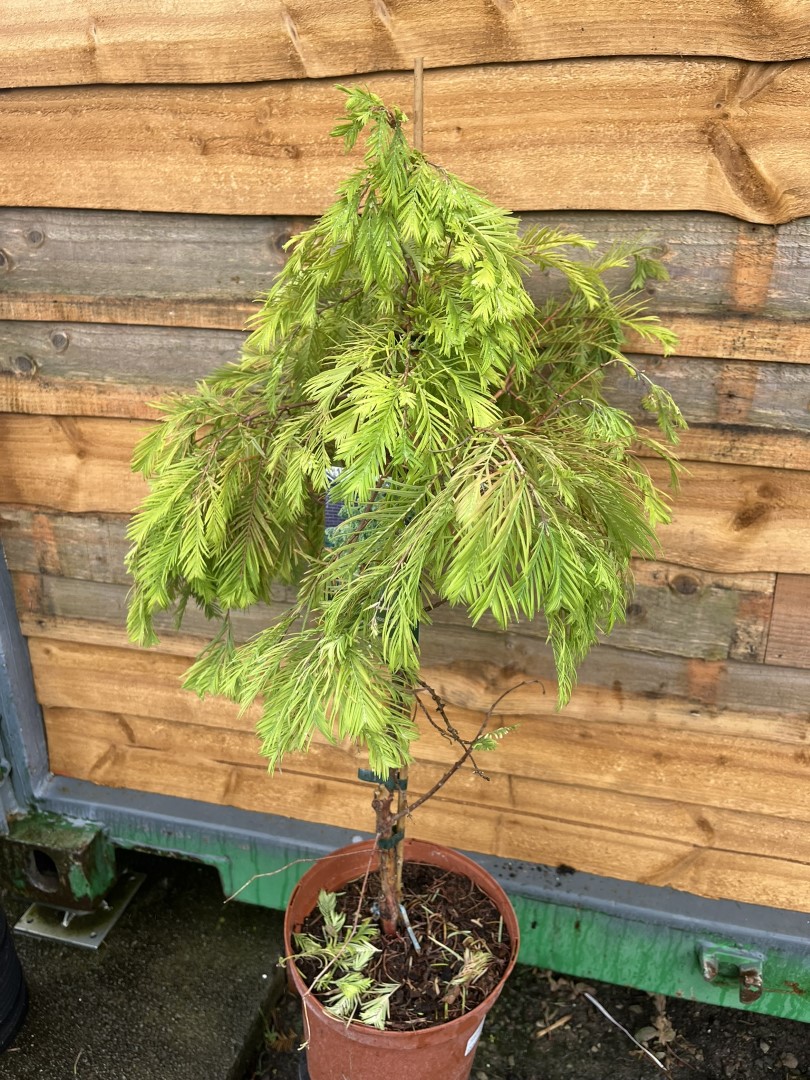
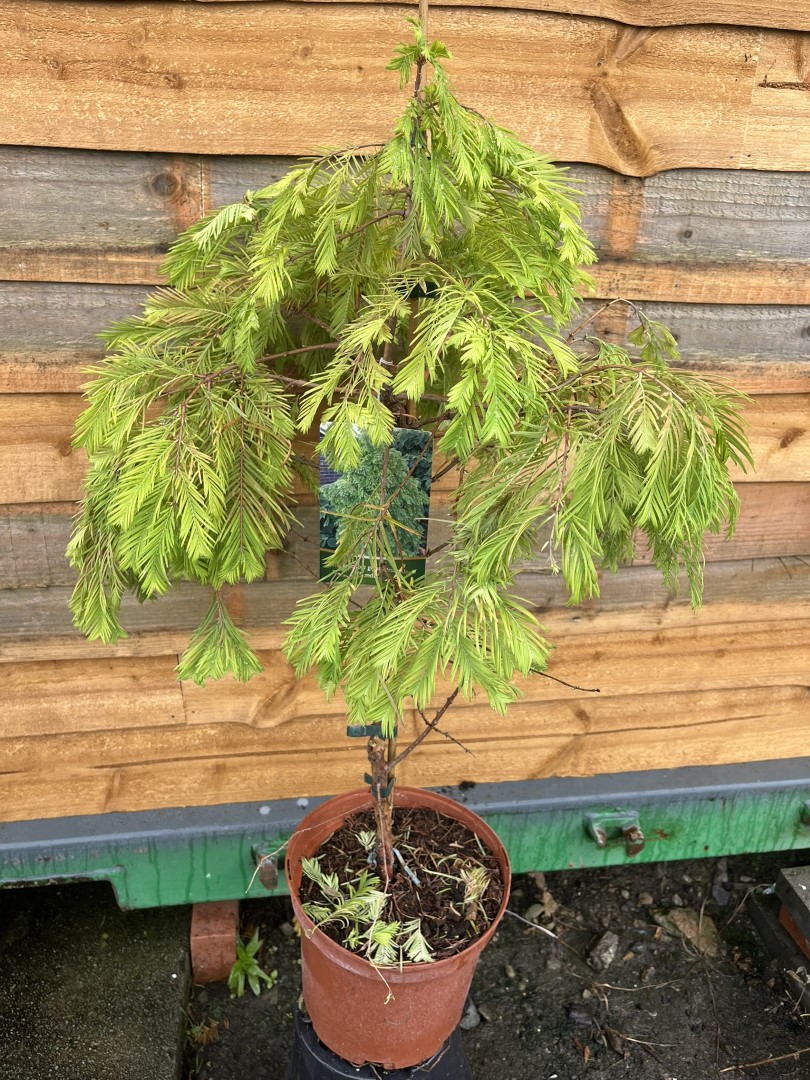
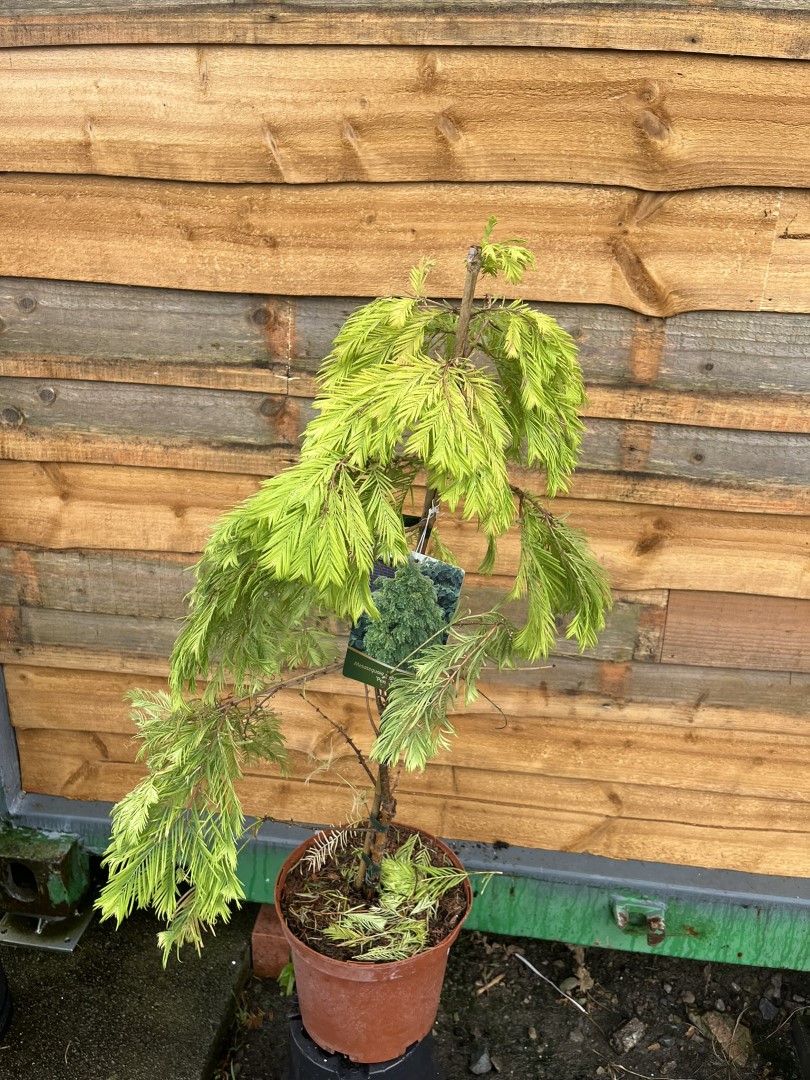
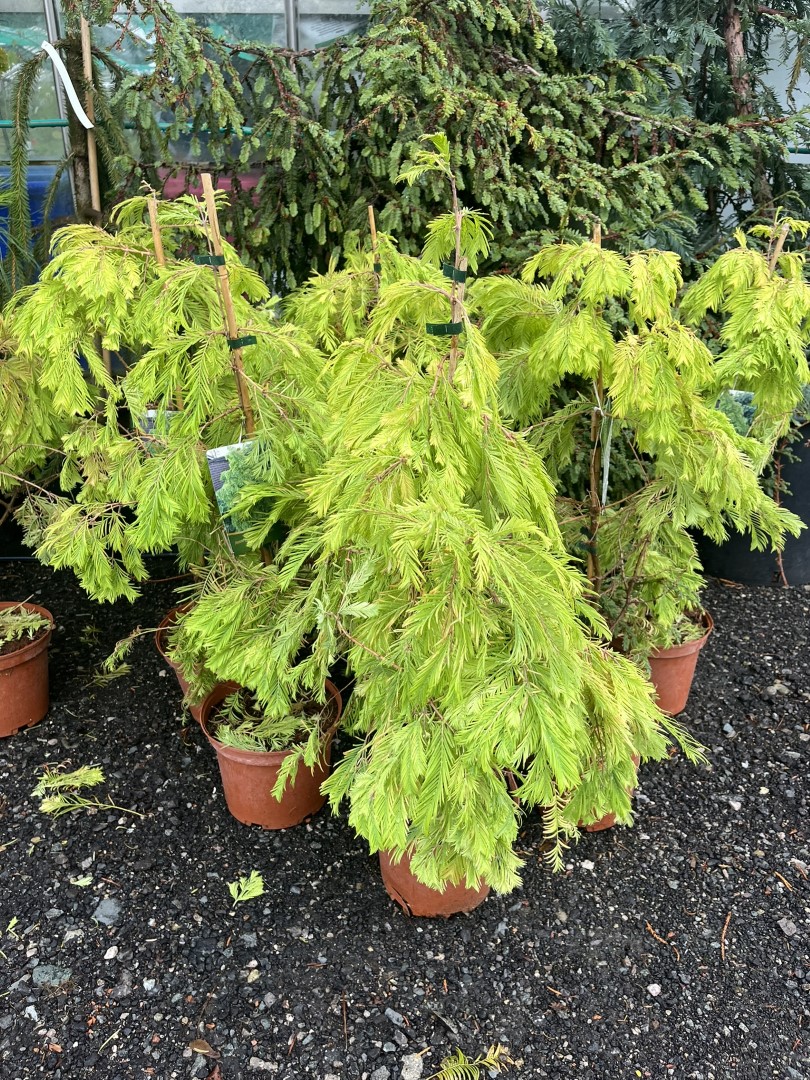
Dawn Redwood ‘Pendula’ 60/80cm (5L)

Metasequoia glyptostroboides

£78.26

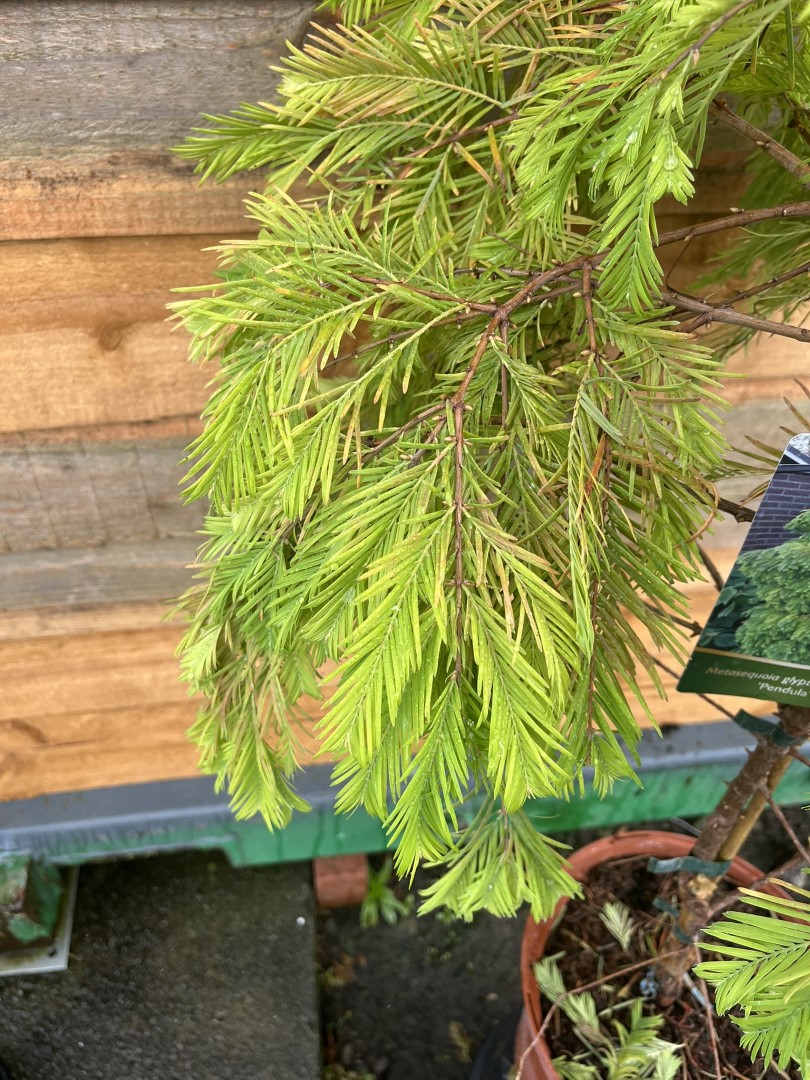
Dawn Redwood ‘Pendula’ – Metasequoia glyptostroboides is a graceful weeping form of this ancient deciduous conifer. Cascading branches clothed in feathery green foliage take on warm bronze and amber tones in autumn, making a distinctive architectural feature for larger gardens.

8 in stock

We have lots of other sizes of redwoods that may not be listed. Get in touch if you need a specific size you don't see online.

Feel free to call 01257 752247 or email us if you would prefer to order on the phone or have any questions. Trade / wholesale enquiries are welcome.

The Dawn Redwood ‘Pendula’ – Metasequoia glyptostroboides is a rare and graceful weeping form of the ancient Dawn Redwood, offering a distinctive architectural presence for larger gardens. This deciduous conifer makes a dramatic focal point, its cascading branches sweeping downwards in elegant curtains of feathery foliage. The soft, needle-like leaves emerge bright fresh green in spring, deepen to rich green through summer, then transform into warm shades of bronze, russet and amber before falling in autumn.

Unlike its upright parent species, ‘Pendula’ develops a more compact, weeping habit that adds movement and texture to the garden throughout the seasons. The fibrous, reddish-brown bark becomes attractively fissured with age, providing year-round interest even after leaf fall. This cultivar is particularly effective when positioned where its weeping form can be fully appreciated, such as beside water features or as a specimen tree in lawn areas.

Despite its ancient lineage—the species was thought extinct until rediscovered in China in the 1940s—this tree adapts remarkably well to modern gardens. It thrives in a range of soil types and tolerates urban pollution better than many conifers. The weeping branches create wonderful dappled shade beneath, making it possible to underplant with shade-loving perennials and bulbs.

Dawn Redwood ‘Pendula’ grows at a moderate pace, allowing gardeners to enjoy its development over the years without it quickly outgrowing its space. The tree performs best in open, sunny positions where it receives adequate moisture, though it shows good tolerance to drier conditions once established. Its deciduous nature means it casts less shade in winter when light is precious, whilst the bare branching structure reveals its elegant architectural form.

This variety works beautifully in contemporary and traditional garden settings alike. The weeping habit softens hard landscaping whilst providing substantial presence. It associates well with other specimen trees, ornamental grasses, and large-leaved perennials that complement its fine-textured foliage.

Care Guide

Plant in moist, well-drained soil enriched with organic matter. Dawn Redwood ‘Pendula’ tolerates most soil types including clay, provided drainage is adequate. Choose a position in full sun or partial shade—full sun encourages the best autumn colour and most compact growth.

Water regularly during the first two growing seasons to establish a deep root system. Once established, the tree shows reasonable drought tolerance but performs best with consistent moisture, particularly during prolonged dry spells in summer. Apply a generous layer of mulch around the base each spring to conserve moisture and suppress weeds.

Feed annually in early spring with a balanced slow-release fertiliser to support healthy growth. Avoid high-nitrogen feeds in late summer as this can produce soft growth vulnerable to frost damage.

Pruning is rarely necessary beyond removing any dead, damaged or crossing branches in late winter. The natural weeping form should be allowed to develop without intervention. If staking is required initially, ensure ties are checked regularly and loosened as the trunk expands.

This tree is generally pest and disease-free, though young growth may occasionally attract aphids in spring. Good air circulation and avoiding overhead watering helps prevent any fungal issues. The species is fully hardy and copes easily with winter temperatures well below freezing.

Ultimate height
Higher than 12 metres

Time to ultimate height
20–50 years

Ultimate spread
4–8 metres
Delivery charges will be based on the highest applicable rate from our rate table, determined by the items in your order.
Alternatively, we offer the option to collect your items in person by prior arrangement.
These prices are based on delivery to UK Mainland. Delivery to Highlands & Islands will be more.
Delivery Class Delivery Cost
Royal Mail Letter - Royal Mail Tracked £2.71
Royal Mail Letter - Royal Mail Second Class £1.10
Standard Items - Standard Courier (APC) £8.95
Standard Items - Standard Courier (Evri) £4.99
Medium Items - Standard Courier (APC) £9.95 This item
Medium Items - Standard Courier (APC/-5|£10.95 This item
Large Items - Pallet Courier £95.00
Large Items - Standard Courier (APC) £20.95
Pallet Courier - Pallet Courier£95.00

Dawn Redwood – Metasequoia glyptostroboides Care Guide

The Dawn Redwood – Metasequoia glyptostroboides is a magnificent deciduous conifer that, despite its prehistoric origins, makes a stunning addition to UK gardens. Once thought extinct and known only through fossils, it was rediscovered in China in the 1940s. These fast-growing trees can reach impressive heights, potentially exceeding 20 metres in UK conditions, though they typically grow smaller in gardens. With their elegant pyramidal shape, feathery foliage that turns bronze in autumn, and distinctive fluted trunk, Dawn Redwoods offer year-round interest and are surprisingly adaptable to various garden conditions.

Soil Requirements
Dawn Redwoods require well-draining soil to prevent root rot and other water-related issues. They prefer slightly acidic to neutral soil (pH 5.5-7.0) and thrive in rich, loamy conditions with high organic matter content. Annual addition of compost or well-rotted manure helps maintain optimal soil quality and supports healthy growth.

Watering Guidelines
Young Trees (1-3 years) need consistent moisture to establish a strong root system. Water deeply once or twice weekly during the growing season, ensuring water reaches the root zone (45-60cm deep). Create a watering basin around the trunk to aid water penetration. Established trees are more drought-tolerant but benefit from deep watering during extended dry periods. Container-grown specimens require more frequent watering, as pots dry out faster than ground soil.

It’s important to note you cannot really over water a Dawn Redwood.

Seasonal Maintenance

Spring (March-May)
Apply a balanced, slow-release fertiliser to support new growth, and refresh the organic mulch layer, keeping it away from the trunk. Remove any winter damage and monitor for emerging pest issues.

Summer (June-August)
Maintain consistent soil moisture and perform any necessary light pruning for shape. Keep the base clear of grass and weeds, and watch for signs of drought stress, particularly during hot spells.

Autumn (September-November)
As the tree prepares for dormancy, reduce watering frequency. Clear fallen leaves to prevent pest harbourage and apply a fresh layer of mulch before winter sets in. This is also the last opportunity for any necessary pruning.

Winter (December-February)
While mature trees are generally hardy, young specimens may need protection from severe frost with horticultural fleece. Water only during dry, frost-free periods, and regularly check the tree’s structure while dormant.

Additional Care Notes
Dawn Redwoods are relatively low-maintenance once established, but proper care during the first few years is crucial for long-term success. They work well with shade-tolerant understory plants and can create striking vertical features in larger gardens. Regular monitoring for signs of stress, disease, or pest issues will help ensure the tree remains healthy and continues to thrive in your garden.

Remember that while these trees can grow quite large, they respond well to pruning and can be maintained at a more manageable size for smaller gardens. Their fast growth rate (potentially 50cm+ annually in good conditions) means they can quickly establish themselves as striking landscape features.

There are no reviews yet.

Your email address will not be published. Required fields are marked *