
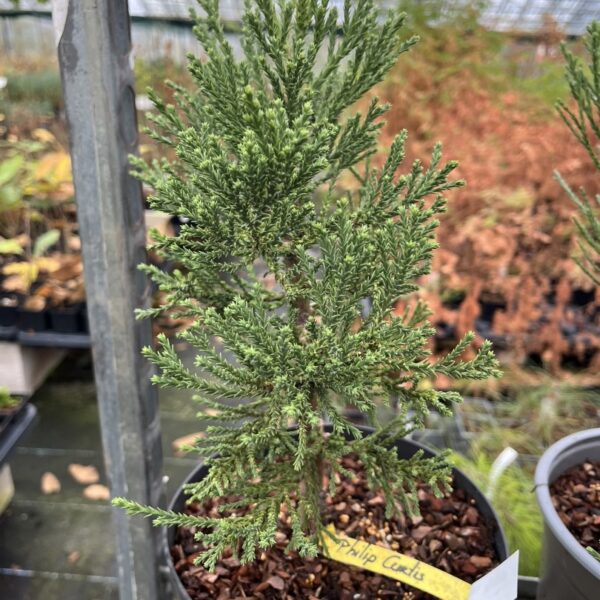
The Giant Redwood ‘Compactum’ offers all the majestic beauty of its towering cousins in a more garden-friendly form. This remarkable cultivar of Sequoiadendron giganteum develops into a stunning conical specimen with dense, blue-green foliage that creates year-round interest. The soft, fibrous bark develops rich cinnamon-red tones as the tree matures, providing wonderful textural contrast against the evergreen needles.
This compact variety is perfect for creating a dramatic focal point in medium to large gardens where space won’t accommodate a full-sized redwood. The dense, scale-like foliage forms attractive sprays that cascade gracefully from sturdy branches, creating a neat pyramidal silhouette. In spring, fresh green growth tips emerge, adding a lovely contrast to the established foliage before darkening to match the rest of the canopy.
‘Compactum’ thrives in British gardens, proving remarkably hardy and adaptable to our variable climate. The tree performs best in full sun positions where it can develop its characteristic dense branching habit, though it will tolerate partial shade. This cultivar shows excellent resistance to wind and frost, making it suitable for exposed positions once established.
Planting and Position
Choose a location with deep, moisture-retentive soil that drains freely. Giant Redwoods appreciate slightly acidic to neutral conditions but adapt well to most soil types except shallow chalk. Dig a generous planting hole and incorporate organic matter to help the young tree establish. Position away from buildings and boundaries, allowing ample space for the mature spread.
Care Guide for British Climate
Water regularly during the first two growing seasons, particularly during dry spells in spring and summer. Once established, the tree develops a deep root system and becomes relatively drought-tolerant, though it appreciates consistent moisture. Apply a 5-8cm layer of mulch around the base each spring, keeping it clear of the trunk to prevent rot.
Feed annually in early spring with a slow-release fertiliser formulated for evergreens. This supports healthy growth and maintains the vibrant foliage colour throughout the year. The tree requires minimal pruning – simply remove any dead, damaged or crossing branches in late winter. Avoid heavy pruning as this can spoil the natural pyramidal form.
Monitor young trees for aphids during warm weather, though established specimens rarely suffer serious pest problems. The thick bark provides natural protection against most diseases. In exposed gardens, provide shelter for young plants during their first winter using temporary windbreaks.
Ultimate height
Higher than 12 metres
Time to ultimate height
20–50 years
Ultimate spread
4–8 metres


There are no reviews yet.