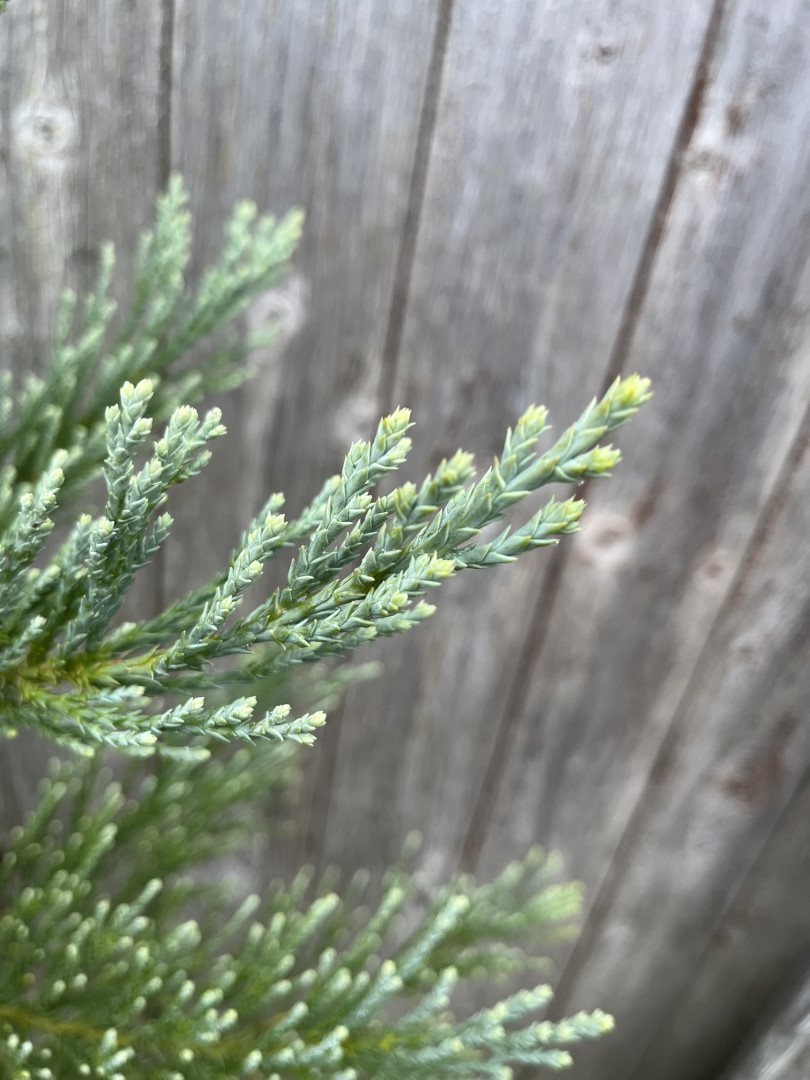
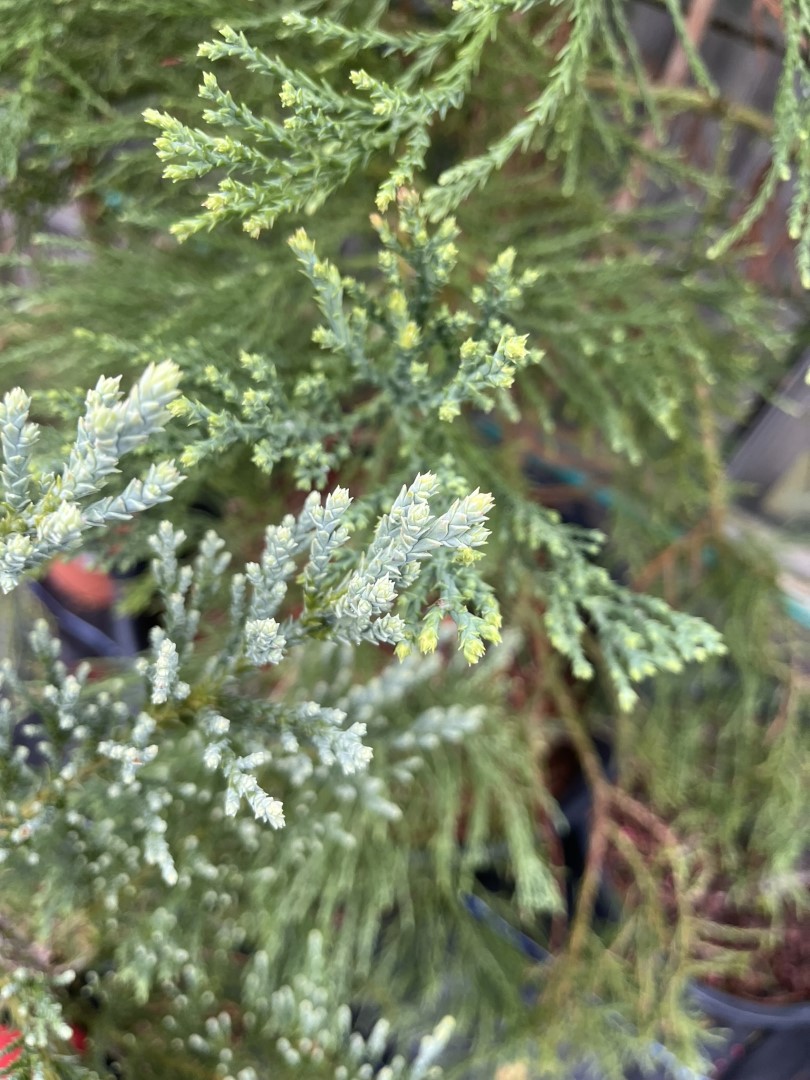
Giant Redwood ‘Powder Blue’ 120/150cm (15L)

Sequoiadendron giganteum

£295.50

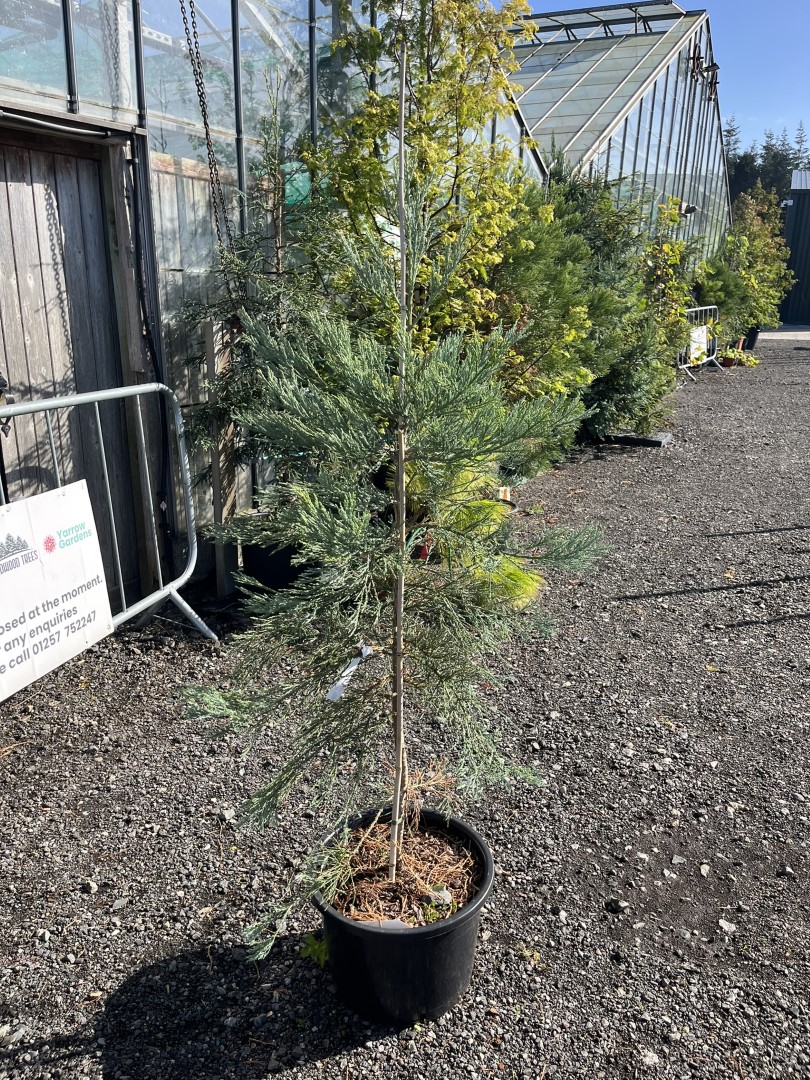
Giant Redwood ‘Powder Blue’ – Sequoiadendron giganteum is a blue-needled selection of the famous Californian giant, forming a strongly conical evergreen with soft powder-blue foliage and thick, fibrous cinnamon-red bark. Supplied at 120/150cm in a 15 litre pot, it is fully hardy, fast-growing in its early years and best given plenty of room as a specimen tree. Plant in full sun on deep, moist but free-draining soil and water well through its first few summers.

1 in stock

This item is only available for delivery by a pallet courier.

We have lots of other sizes of redwoods that may not be listed. Get in touch if you need a specific size you don't see online.

Feel free to call 01257 752247 or email us if you would prefer to order on the phone or have any questions. Trade / wholesale enquiries are welcome.

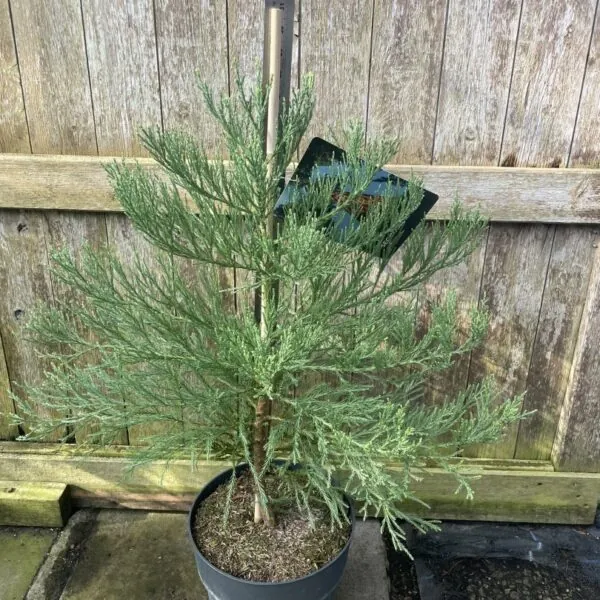
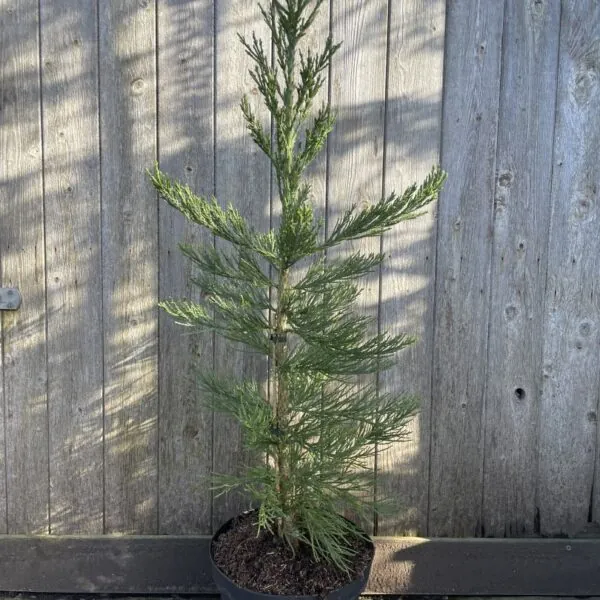
Giant Redwood ‘Powder Blue’ – Sequoiadendron giganteum is a selected blue-foliaged form of one of the largest and longest-lived trees on earth, offered here as a well-grown specimen of 120/150cm supplied in a 15 litre container. Where the species carries grey-green needles, this selection holds a soft powder-blue cast that is most pronounced on new growth in late spring and holds its tone through winter, giving a cool, silvery presence against darker evergreens, brick walls or open sky.

The habit is strongly conical, with a central leader rising straight and tiers of dense, slightly drooping branches clothed in short, awl-shaped scale leaves that spiral around the shoots. These needles are prickly to the touch and release a faint resinous scent when brushed. With age the trunk becomes buttressed and deeply fluted, covered in thick, fibrous, cinnamon-red bark that is spongy to press and remarkably fire and pest resistant. Small, egg-shaped cones around 4/7cm long appear on mature trees, ripening from green to brown over two seasons.

This is a tree for space. Planted as a single specimen on a lawn, at the end of a long view, or marking a driveway or boundary on a larger property, it develops a silhouette that becomes a landmark within a few decades. Growth in the early years is quick, often 30/60cm annually once established, slowing as the crown matures. It is fully hardy throughout Britain, tolerates exposure once settled, and copes with cold winters, coastal wind inland of the salt line, and the fluctuating conditions of recent seasons.

The bluest Giant Redwood in cultivation at the moment with all year round vibrant blue foliage that stays with the tree as it gets older. An open an airy upright habit.

Care Guide

Plant from autumn to early spring while the soil is workable, avoiding frozen or waterlogged ground. Choose a position in full sun or very light shade; blue colouring is strongest in open light. Deep, moist but free-draining loam suits it best, though it accepts clay that does not sit wet and sandy soils improved with organic matter. Dig a hole twice the width of the rootball and no deeper, tease out any circling roots, and set the tree at the same depth it sat in the pot. Backfill firmly, water in thoroughly, then mulch with 5/8cm of bark or composted material, keeping it clear of the trunk.

Water generously through the first two or three summers, particularly during dry spells from June to August, as young redwoods resent drought. A single bucketful once or twice weekly is more effective than frequent light sprinkling. Apply a balanced slow-release feed in early spring if growth seems sluggish, though established trees rarely need feeding.

Staking is advisable on exposed sites for the first two winters; use a low stake and a flexible tie, checking annually that it is not constricting the trunk. Pruning should be minimal. Never remove or shorten the leading shoot, as this spoils the natural outline permanently. Remove only dead, damaged or crossing branches in late winter. Lower limbs may be lifted gradually to reveal the bark. Keep grass and weeds away from the base while young.

Ultimate height
Higher than 12 metres

Time to ultimate height
More than 50 years

Ultimate spread
8 metres or more

Delivery charges will be based on the highest applicable rate from our rate table, determined by the items in your order.
Alternatively, we offer the option to collect your items in person by prior arrangement.
These prices are based on delivery to UK Mainland. Delivery to Highlands & Islands will be more.
Delivery Class Delivery Cost
Royal Mail Letter - Royal Mail Tracked £2.71
Royal Mail Letter - Royal Mail Second Class £1.10
Standard Items - Standard Courier (APC) £8.95
Standard Items - Standard Courier (Evri) £4.99
Medium Items - Standard Courier (APC) £9.95
Medium Items - Standard Courier (APC/-5|£10.95
Large Items - Pallet Courier £95.00
Large Items - Standard Courier (APC) £20.95
Pallet Courier - Pallet Courier£95.00 This item

Giant Redwood – Sequoiadendron giganteum Care Guide

The Giant Redwood – Sequoiadendron giganteum, also known as the Wellingtonia here in the UK or Sierra Redwood in the USA, is among the most imposing of all conifers. While it won’t reach the monumental sizes seen in its native California, UK specimens can still grow to impressive heights of 30-40 metres or more. Distinguished by its massive trunk, soft, fibrous red-brown bark, and pyramidal shape, this evergreen giant creates an unforgettable presence in the landscape. Despite its enormous size, it’s surprisingly adaptable and has been successfully grown in UK gardens since Victorian times.

Soil Requirements
Giant Redwoods prefer well-draining, deep soils with a pH between 6.0 and 7.0. While adaptable to various soil types, they perform best in moisture-retentive, fertile soils with good organic content. The soil should be free-draining but capable of maintaining consistent moisture, as these trees require regular access to water despite being somewhat drought-tolerant once established.

Watering Guidelines
Newly planted trees need regular, deep watering to establish a strong root system during their first 2-3 years. Create a watering basin around the trunk and water deeply but infrequently to encourage deep root growth. Mature trees are more drought-tolerant but benefit from supplemental watering during extended dry periods. Container-grown specimens require more frequent watering and excellent drainage.

Seasonal Maintenance

Spring (March-May)
Apply a balanced, slow-release fertiliser if needed, particularly for younger specimens. Refresh the mulch layer, maintaining a depth of 7-10cm while keeping it away from the trunk. Check for winter damage and remove any dead or damaged branches.

Summer (June-August)
Monitor soil moisture levels, particularly during hot spells. While established trees are relatively drought-tolerant, consistent moisture promotes optimal growth. Minimal pruning is needed; focus on removing any dead, diseased, or crossing branches.

Autumn (September-November)
Reduce watering as temperatures cool and growth slows. Apply a fresh layer of mulch to protect roots through winter. Clear fallen debris from around the base to discourage pest habitation and disease.

Winter (December-February)
While generally hardy, young trees may benefit from protection against severe frost and cold winds. Avoid watering during freezing conditions. Check regularly for snow damage, particularly on younger specimens, as heavy snow can break branches.

Additional Care Notes
Giant Redwoods require significant space, not just for their height but also for their considerable spread at maturity. They create impressive vertical features and make excellent specimen trees in larger landscapes. While they can tolerate some pruning when young to maintain shape, they’re best left to develop their natural form.

These trees are generally resistant to pests and diseases, but regular monitoring helps identify any issues early. They prefer locations with full sun and shelter from strong winds, particularly when young. Consider their ultimate size carefully before planting, as they can dominate a landscape and potentially affect neighbouring properties.

Unlike their coastal cousin, Giant Redwoods have a better tolerance for drier conditions once established, though they still appreciate consistent moisture. Their impressive longevity means they can become heritage trees for future generations, making them an excellent choice for parks, large estates, and spacious private gardens where they have room to achieve their magnificent potential.

There are no reviews yet.

Your email address will not be published. Required fields are marked *