
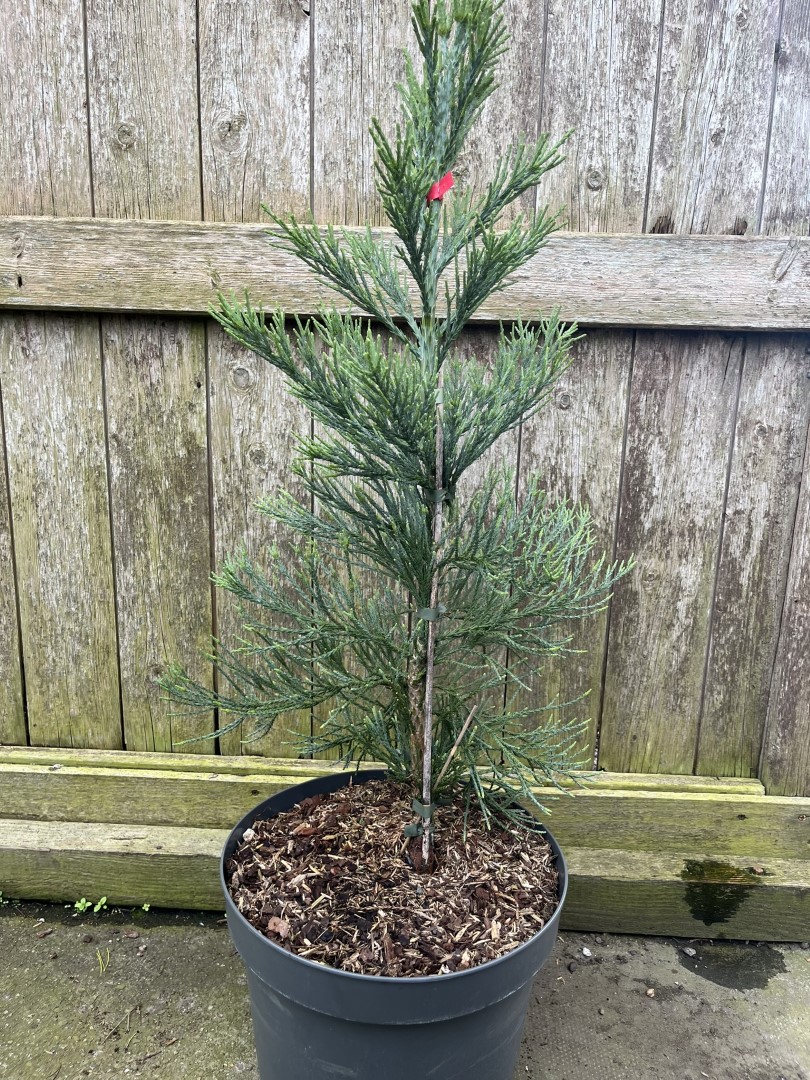
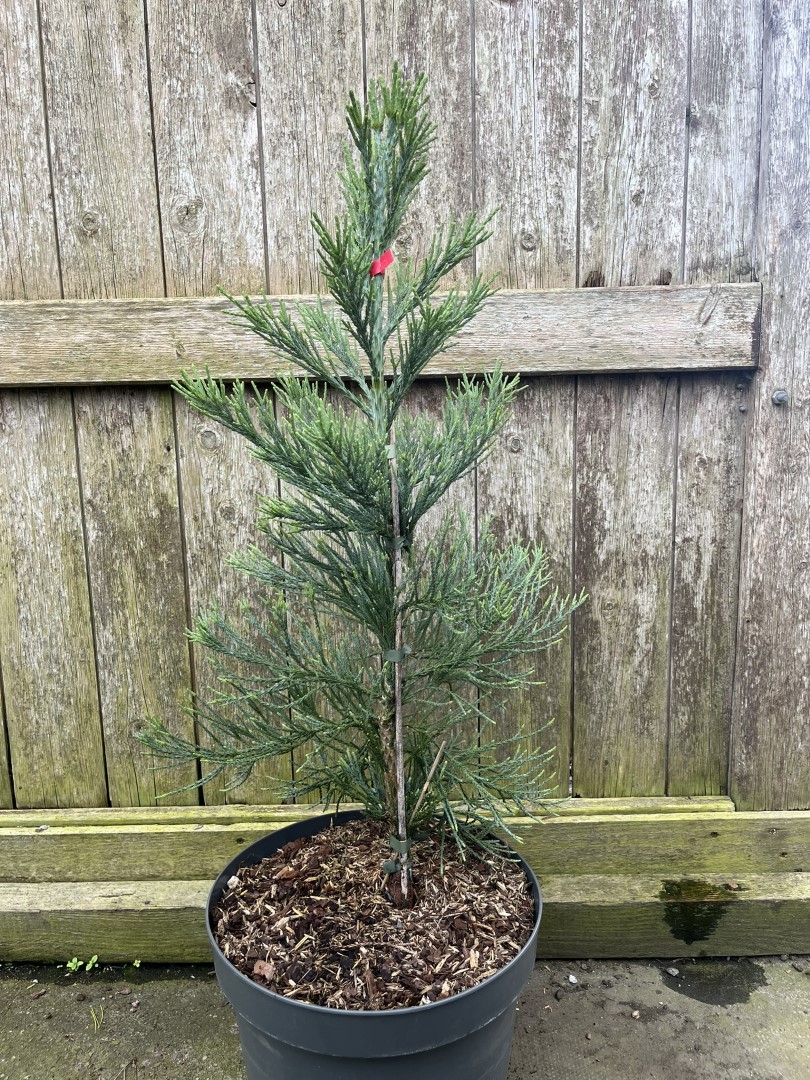
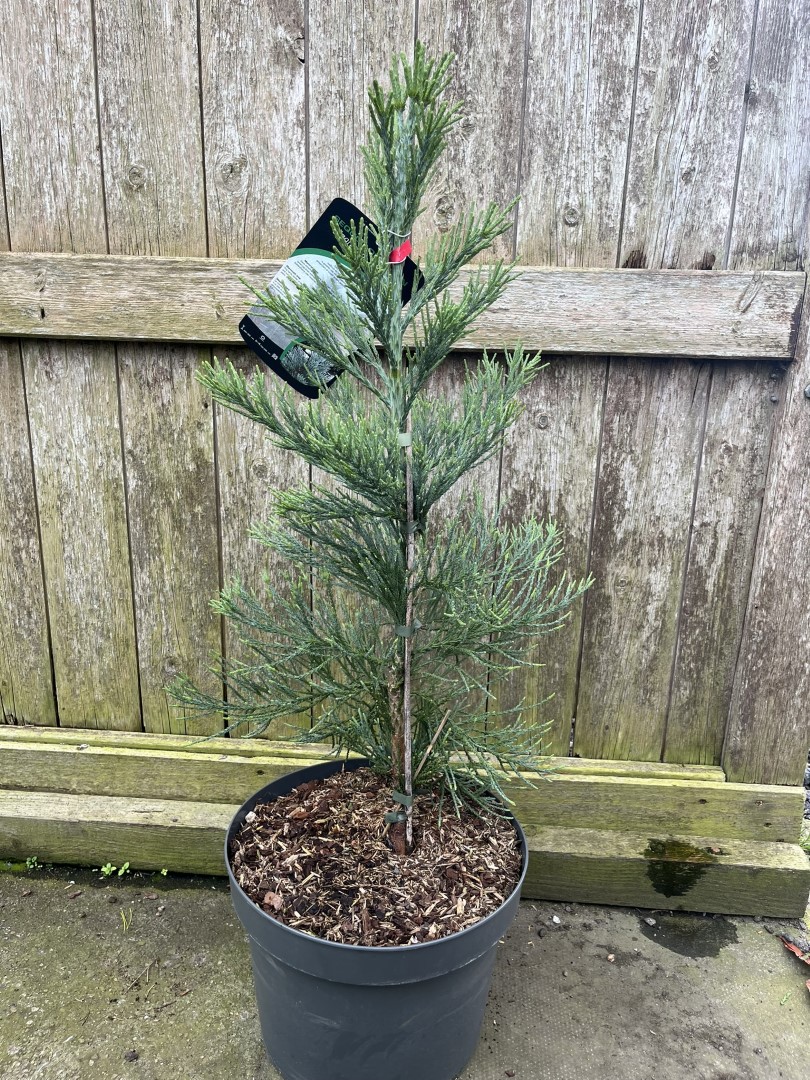
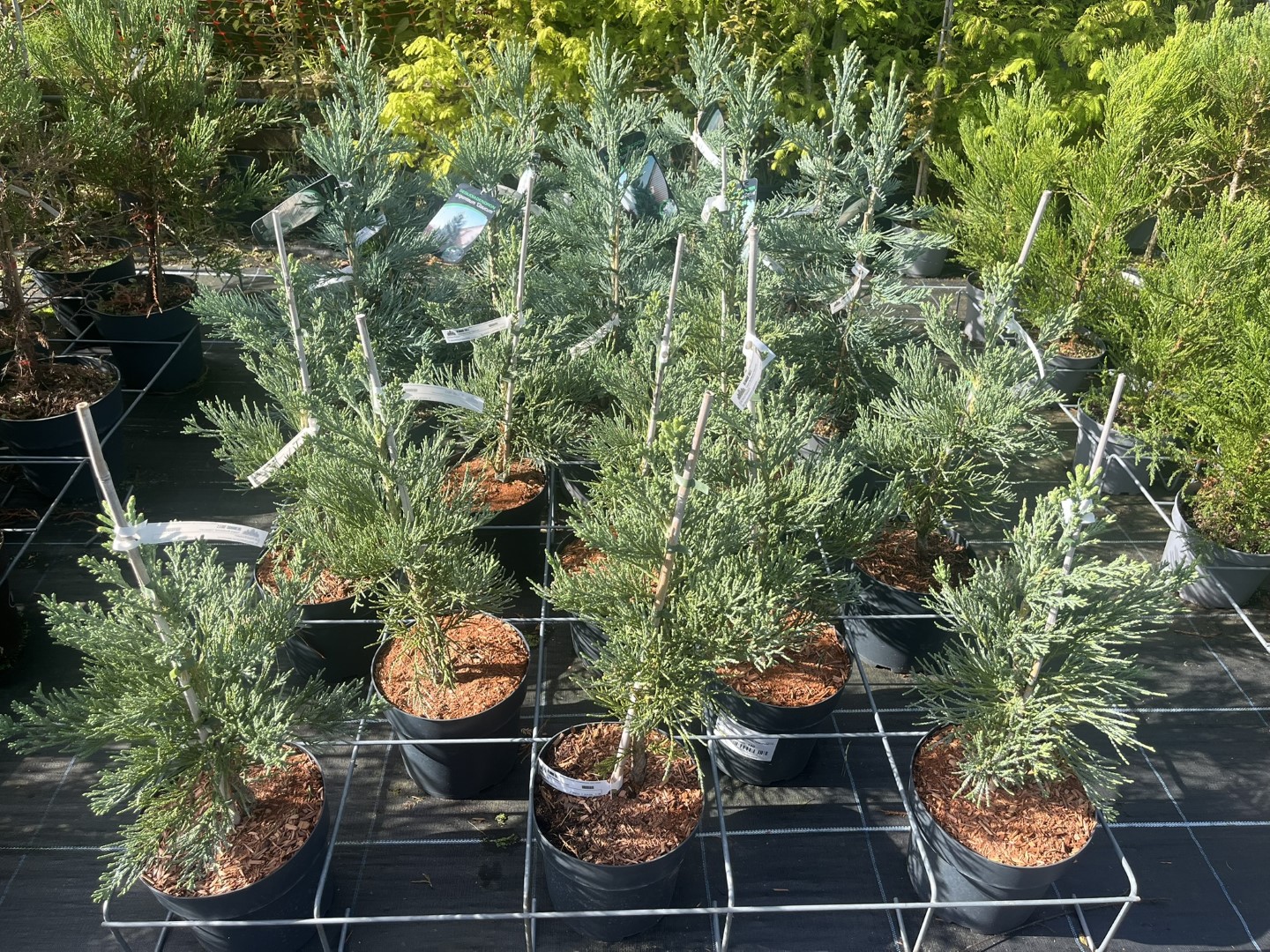
The Giant Redwood ‘Glaucum’ brings the majesty of California’s ancient forests to British gardens as a magnificent specimen tree. This striking cultivar of Sequoiadendron giganteum is particularly prized for its distinctive blue-grey foliage, which creates a stunning silvery appearance that sets it apart from the species type. The glaucous needles catch the light beautifully throughout the seasons, providing year-round architectural interest and a touch of the extraordinary to any planting scheme.
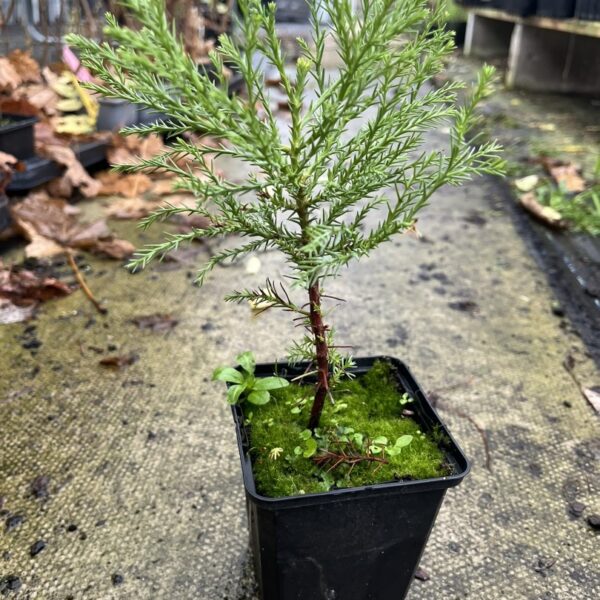
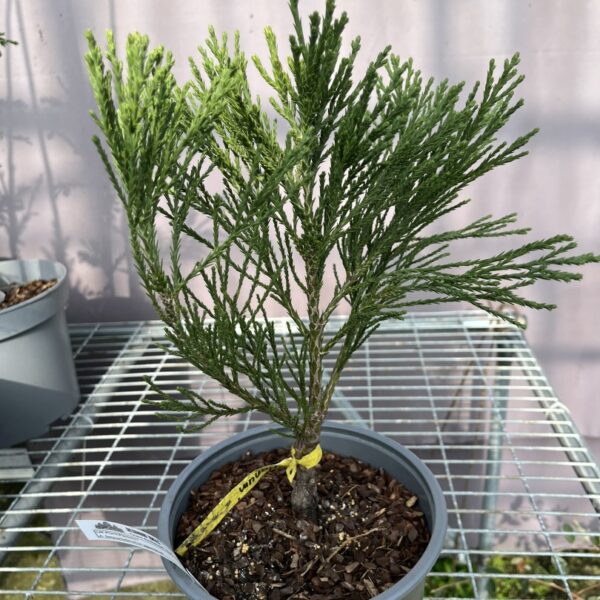
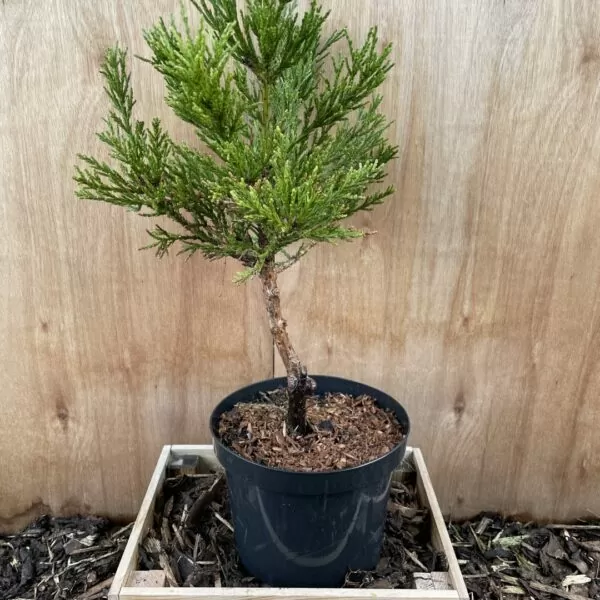
This particular specimen stands at 60-80cm tall and arrives in a substantial 10-litre pot, meaning it’s already well-established and ready to make an immediate impact in your garden. The ‘Glaucum’ cultivar develops into a magnificent conical tree with dense, sweeping branches that reach towards the ground, creating that classic redwood silhouette that’s instantly recognisable. The soft, scale-like foliage has a wonderful texture, and the blue-grey colouration intensifies during the cooler months, providing exceptional winter interest.
Giant Redwoods thrive in the British climate, coping well with our moderate temperatures and regular rainfall. Despite their origins in the Sierra Nevada mountains, they’ve been successfully cultivated in gardens and estates across Britain since Victorian times, with many specimens now towering over historic landscapes. The ‘Glaucum’ form is particularly hardy, tolerating temperatures well below freezing and showing excellent resistance to wind and weather.
The thick, fibrous bark develops with age, becoming deeply furrowed and spongy to the touch—a characteristic feature that provides winter protection and adds to the tree’s sculptural appeal. Young trees grow with vigour, putting on impressive height each year once established, though they benefit from shelter during their first few seasons. The root system is surprisingly shallow but wide-spreading, so ensure adequate space when positioning your tree.
Care Guide for British Climate
Plant your Giant Redwood ‘Glaucum’ in a position with full sun to partial shade, though it performs best with maximum light exposure. The soil should be deep, moist but well-drained, and slightly acidic to neutral. These trees are surprisingly adaptable to different soil types, including clay, provided drainage is adequate. Avoid exposed, windy sites during the establishment phase.
Water regularly during the first two growing seasons, particularly during dry spells in spring and summer. Once established, the tree becomes remarkably drought-tolerant, though it appreciates consistent moisture. Apply a generous layer of organic mulch around the base each spring, keeping it clear of the trunk to prevent rot.
Fertilising is rarely necessary if planted in reasonable soil, though a slow-release general fertiliser in early spring can encourage strong growth in younger specimens. Pruning is generally unnecessary and should be avoided—allow the tree to develop its natural form. Remove any dead or damaged branches in late winter if required.
Protect young trees from harsh winds and late frosts during their first few winters with horticultural fleece if necessary. Watch for signs of stress during prolonged dry periods, indicated by browning foliage. Giant Redwoods have few pest or disease problems in British gardens, making them remarkably low-maintenance once established.
Ultimate height
Higher than 12 metres
Time to ultimate height
20–50 years
Ultimate spread
4–8 metres

There are no reviews yet.