
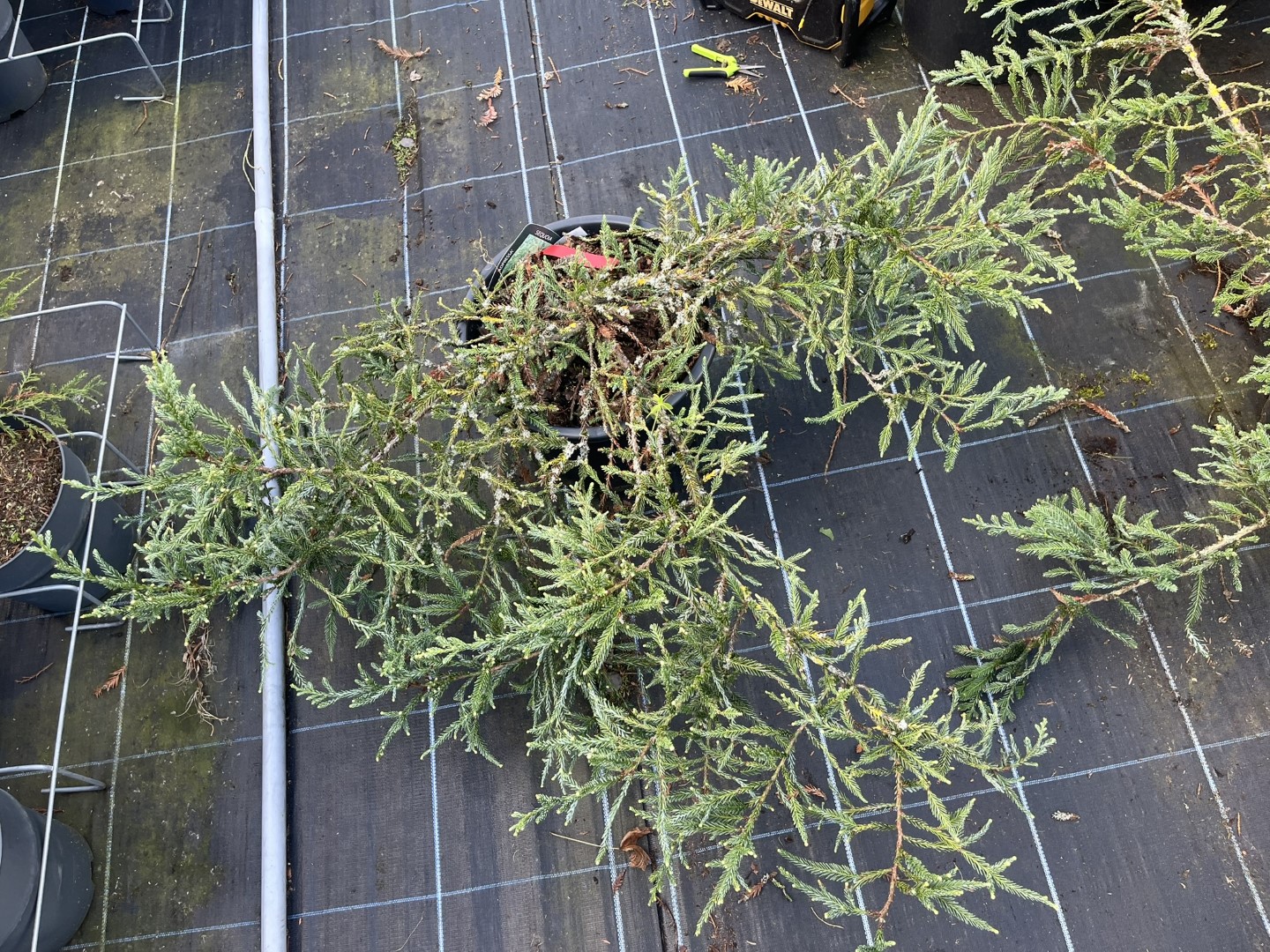
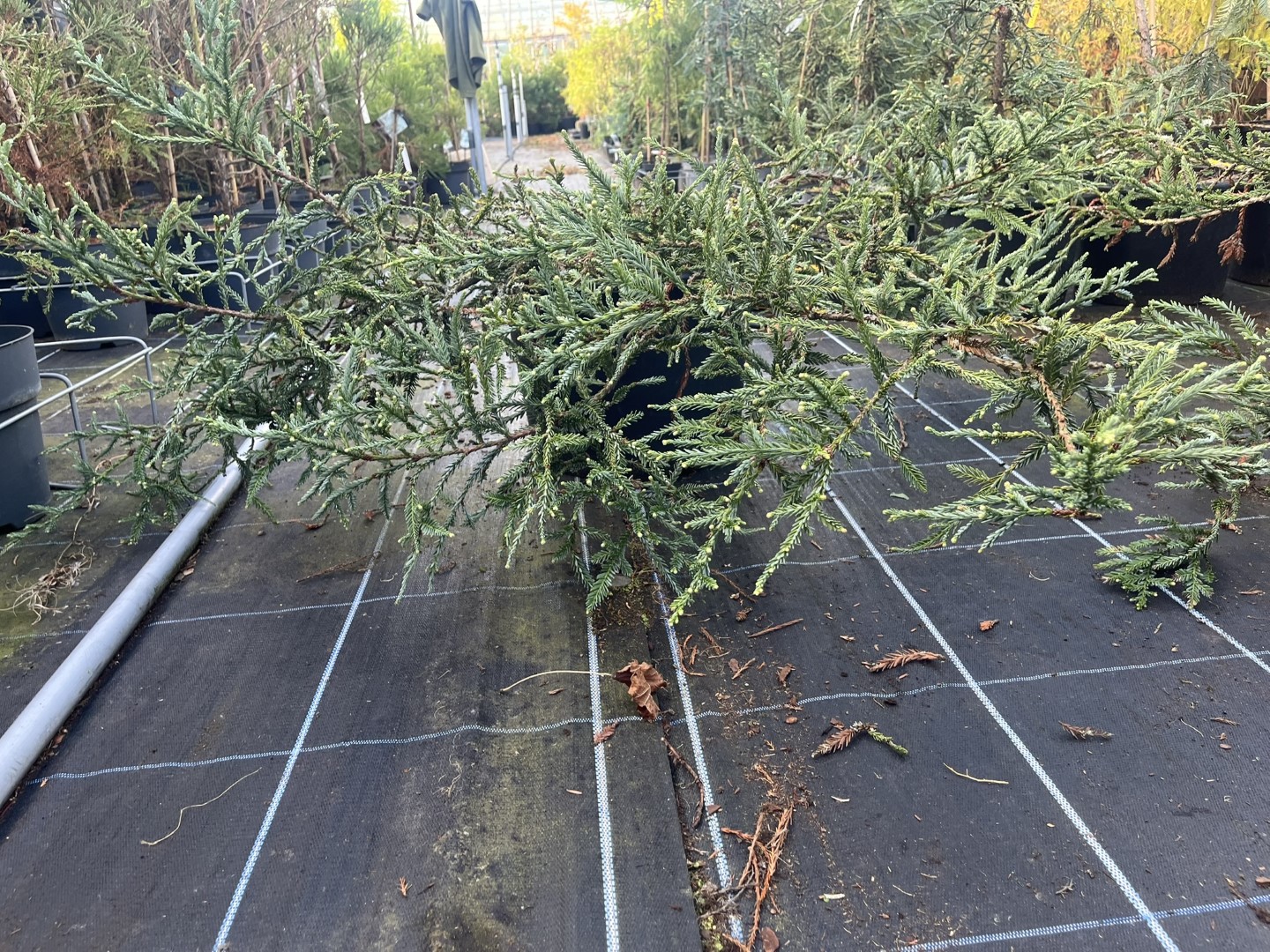
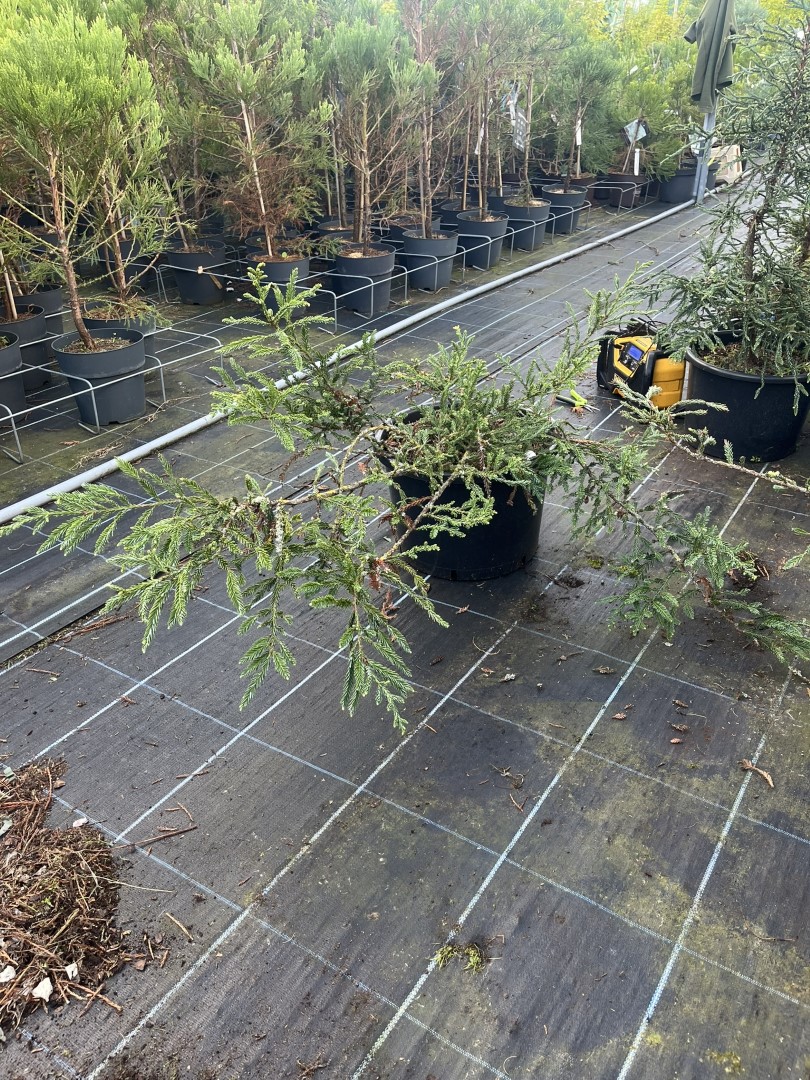
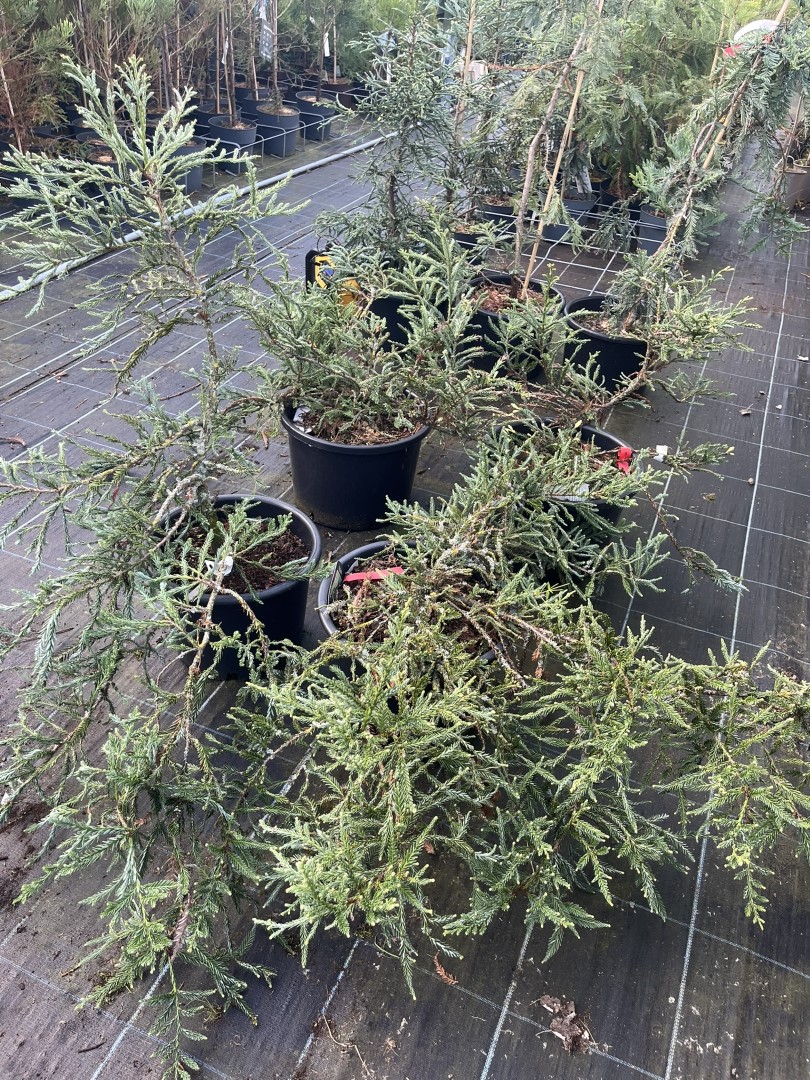
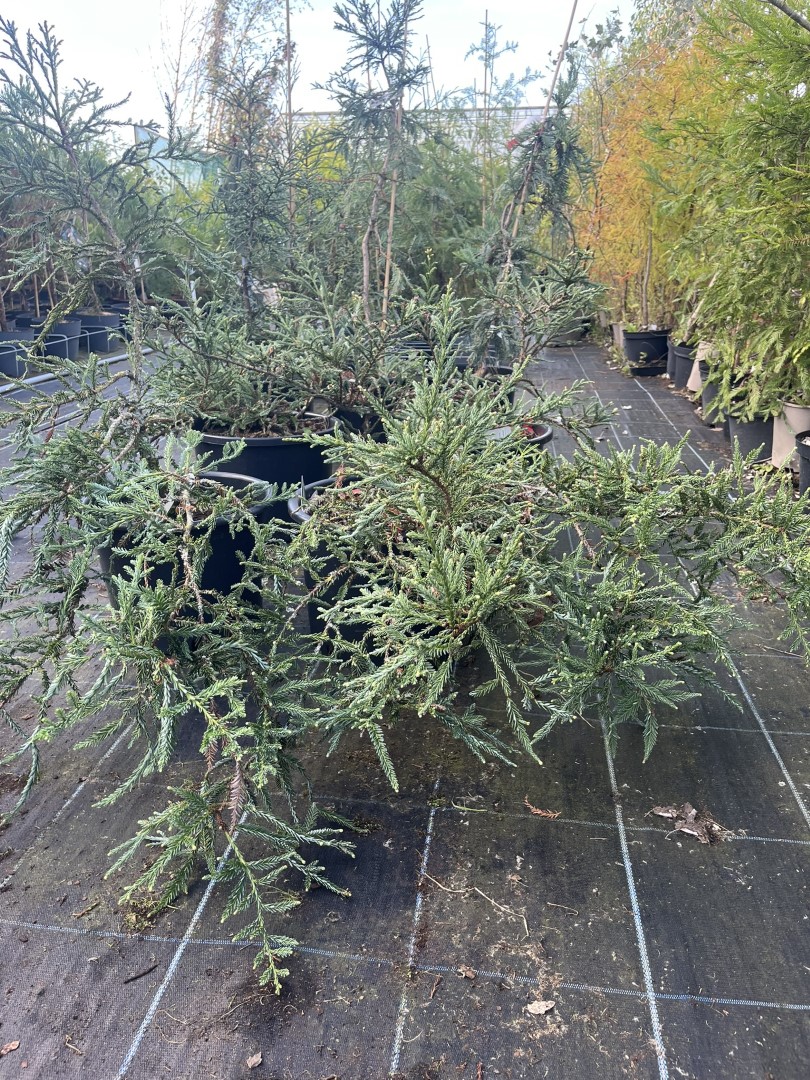
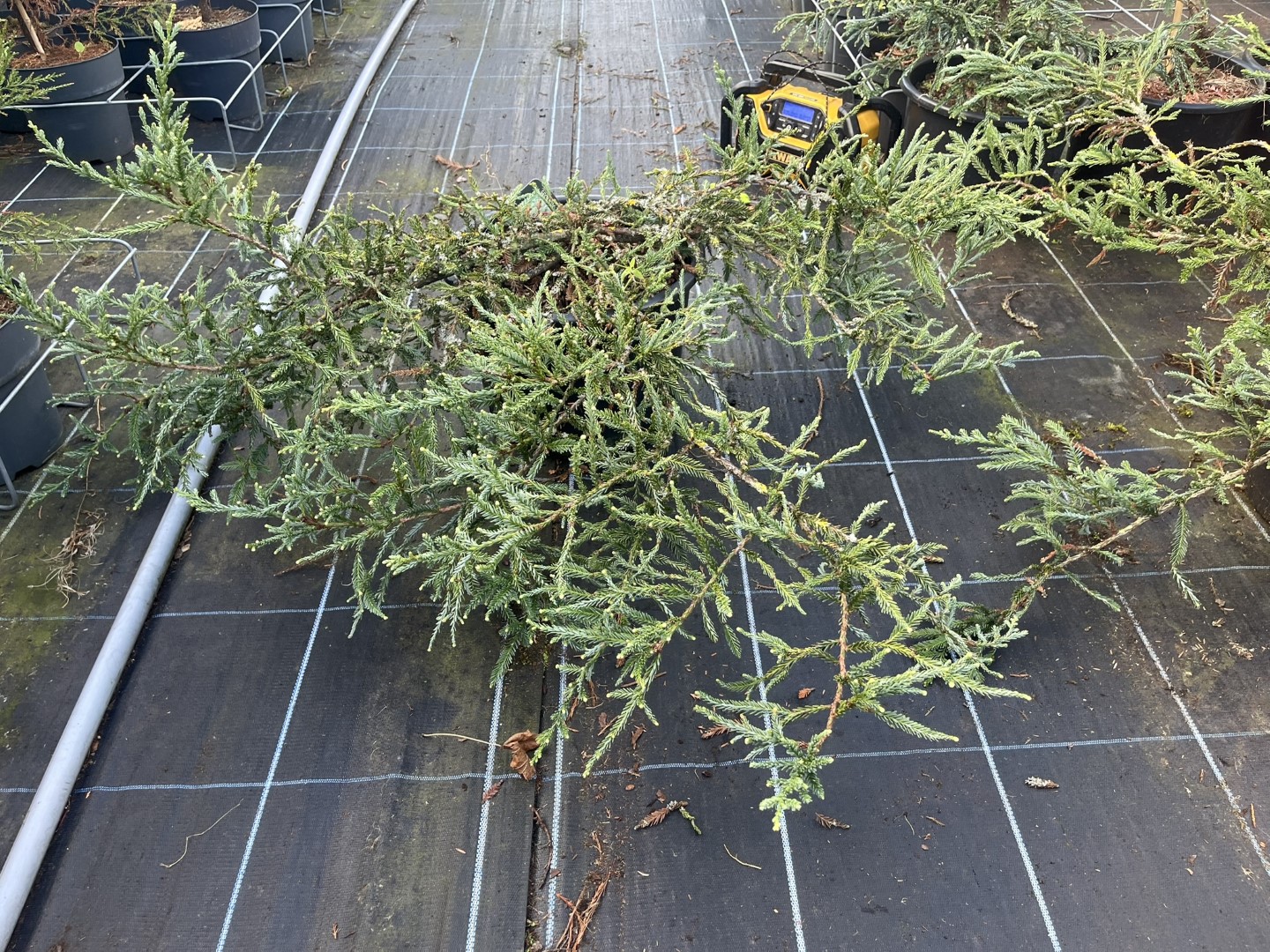

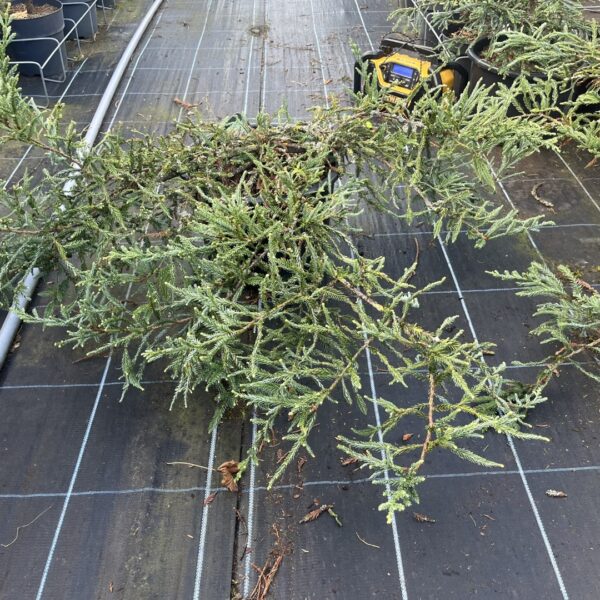
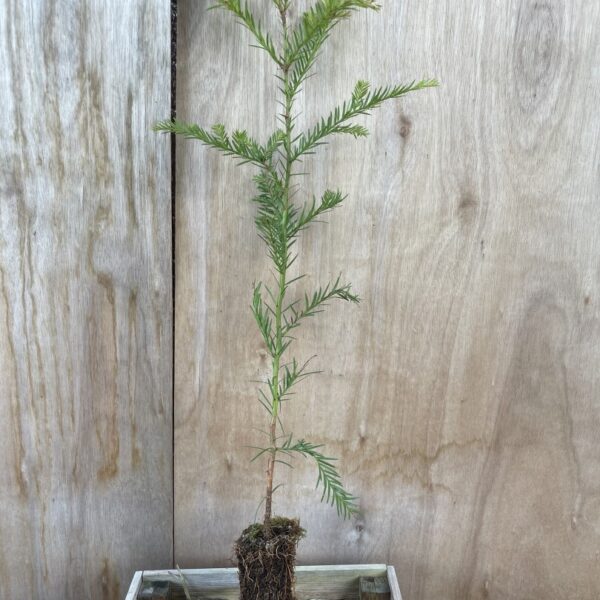
Coast Redwood ‘Adpressa’ – Sequoia sempervirens is a slow-growing, soft-textured selection of the Californian coast redwood, grown for its creamy-white new growth and neat, bushy habit. Supplied here as a bush at 60/80cm in a 25L pot, this is a well-furnished plant with branching from low down, ready to establish quickly in a prepared border or to be grown on in a larger container.
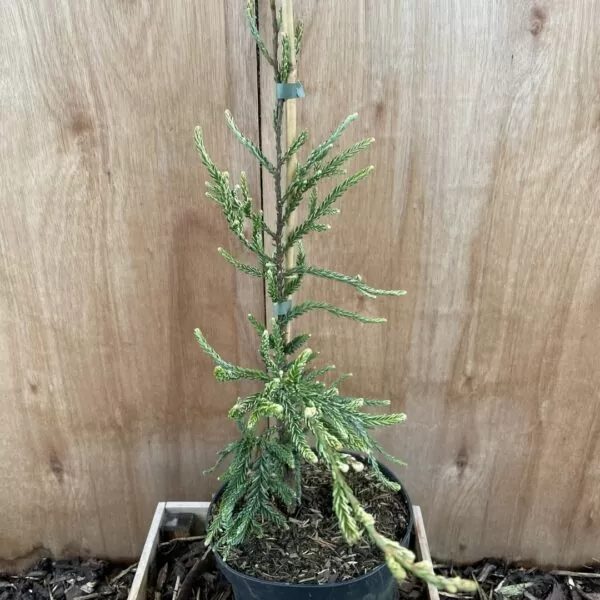
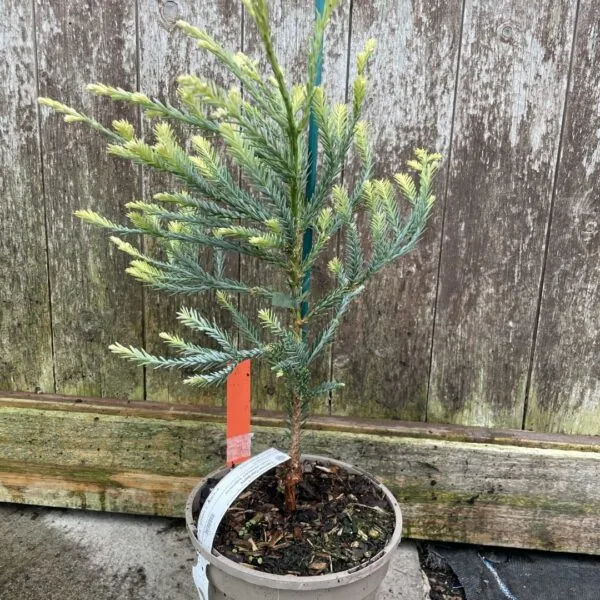
The appeal of ‘Adpressa’ lies in the contrast between its two tones of foliage. Fresh shoots emerge tipped in ivory-white, looking almost as though the branch ends have been dusted with frost, while the older foliage behind matures to a deep blue-green. The flattened sprays of short, closely-held needles are soft to the touch and arranged in neat ranks along the shoots, giving the plant a feathery appearance that softens the formality of evergreen planting. Mature stems develop the fibrous, russet-brown bark typical of the species.
Unlike the towering forest trees of the Pacific coast, this cultivar is far more restrained and much slower in growth, making it a practical choice for gardens of moderate size. It can be left to form a broad, multi-stemmed bush, clipped lightly to keep it compact, or trained upwards over time to make a small specimen tree with a conical outline. It works well as a focal point in a gravel garden, as a year-round anchor in a mixed shrub border, or planted in groups where the pale new growth reads clearly from a distance. Grown in a large pot on a terrace, it also makes an attractive evergreen feature beside a seating area or doorway.
Care Guide
Coast redwoods prefer the damp, mild conditions found in much of the west and south of Britain, so choose a sheltered position out of cold, drying easterly winds. Full sun to light dappled shade suits it best; deep shade will thin the foliage and dull the white tips.
Plant into deep, fertile, moisture-retentive soil that drains freely. Dig a hole twice the width of the 25L rootball, loosen the base, and mix in well-rotted organic matter. Set the plant at the same depth it sat in the pot, firm gently and water in thoroughly. A 5/8cm mulch of bark or leaf mould, kept clear of the stems, will conserve summer moisture and protect shallow roots.
Watering is the key to success in the first two or three seasons. Water deeply once or twice a week during dry spells from April to September, and continue in autumn if conditions stay dry. Established plants still appreciate irrigation in prolonged drought.
Feed in early spring with a balanced slow-release fertiliser, or a conifer feed if growth seems sluggish. Pruning is optional: trim lightly in late spring to shape, cutting back into green growth rather than old bare wood. Young plants may bronze in very cold winters but usually recover; a temporary windbreak helps in exposed, frost-prone gardens.
Ultimate height
8–12 metres
Time to ultimate height
20–50 years
Ultimate spread
Not confirmed
Pallet courier or collection due to the spread of these trees.
There are no reviews yet.